Quick answer
Our overall pick for clover seed for lawn is the Pennington Clover Grass Seed Mix for its broad hardiness and included grass seed. The Flawn Seed Kits option is best for an established, organic flowering lawn, while the Sweet Yards packet suits a small test patch or starter project.
Adding white clover to your lawn is a fantastic step toward a more resilient, pollinator-friendly yard. It can reduce the need for fertilizer, help with weed suppression, and provide vital forage for bees. We looked at manufacturer listings to find the best clover seed for lawn projects, comparing coverage, planting needs, and suitability for different goals.
Whether you want to overseed an existing lawn, start a dedicated clover patch, or use it as a ground cover, there’s an option here for you. Our picks are based solely on the features and specifications provided by the brands.
Our picks at a glance
Pros
- Combines clover with grass seed for integrated lawn renovation.
- Large 7 lb bag covers a significant area (up to 1,400 sq ft).
- Listed for a very wide range of USDA hardiness zones (1-12).
Cons
- The listing does not mention if the seeds are organic or non-GMO.
- Requires regular watering, which may not be as drought-tolerant as pure clover.
- Expected blooming period is only listed as fall.

Pros
- Listed as organic, GMO-free, and coated for better germination.
- Detailed planting and care instructions are provided.
- Attracts pollinators, is drought-tolerant, and has an extended bloom time.
Cons
- Smaller 1 lb quantity compared to some other options.
- Requires careful initial watering and mowing regimen for the first year.
- The packaging is kraft material, which may not be as moisture-resistant as plastic.

Pros
- Large 5 lb bag offers a lot of seed for the quantity.
- Versatile uses: ground cover, erosion control, food plot, and lawn.
- Listed as drought-tolerant and GMO-free.
Cons
- Generic brand may have less consistent customer support.
- The listing does not mention a specific coverage area in square feet.
- The expected plant height is listed simply as "8" (likely inches, but context is unclear).

Pros
- Small, packet is perfect for testing clover in a section of your yard.
- Comes in giftable, resealable packaging with planting instructions.
- The brand offers a germination guarantee.
Cons
- Very small quantity (1 oz) is not practical for renovating a full lawn.
- The listing provides minimal specifications (no USDA zone, sunlight, or watering needs listed).
- The listing does not mention if the seeds are coated or organic.
How we chose
Our editors compared manufacturer listings and specifications on Amazon as of October 2026. We did not test or review these products hands-on. Our selections are based on analyzing the listed features, coverage area, planting instructions, and suitability for creating a bee-friendly lawn.
We focused on criteria like whether the seed was a mix or pure clover, its USDA hardiness zone, sunlight and moisture needs, and any special features like being organic or coated for better germination. This helps identify which clover seed for lawn is right for different scenarios.
Best White Clover Seed for Lawns: our picks in detail
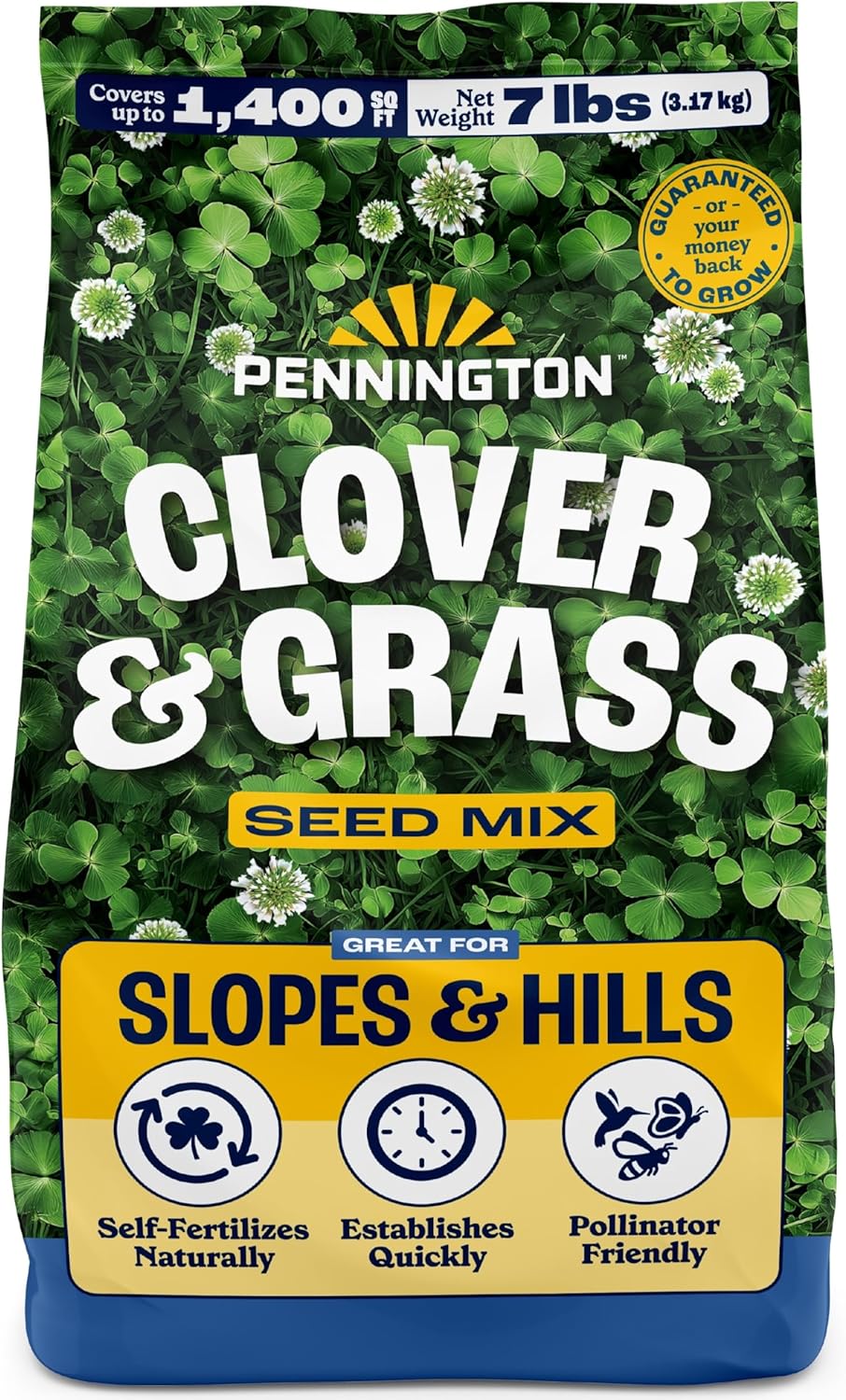
1. Best overall: Pennington Clover Grass Seed Mix, 7 lb
This Pennington mix combines white clover seeds with grass seed, designed for lawns in northern U.S. regions. The listing states the 7 lb bag can cover up to 1,400 square feet. It’s intended for fall planting and blooming, needing about 4-6 hours of sun per day and regular watering.
The product is listed for USDA Hardiness Zones 1-12, which is an exceptionally wide range, and the expected plant height is 2 inches. This mix is a straightforward option for homeowners looking to add clover to their existing turf without starting from scratch.
Best for: Homeowners in northern regions wanting to easily overseed a traditional lawn with clover.
Pros
- Combines clover with grass seed for integrated lawn renovation.
- Large 7 lb bag covers a significant area (up to 1,400 sq ft).
- Listed for a very wide range of USDA hardiness zones (1-12).
Cons
- The listing does not mention if the seeds are organic or non-GMO.
- Requires regular watering, which may not be as drought-tolerant as pure clover.
- Expected blooming period is only listed as fall.
2. Best for an organic flowering lawn: Flawn Seed Kits Organic White Dutch Clover, 1 lb
This 1 lb bag of coated organic white Dutch clover from Flawn Seed Kits is marketed specifically for creating a flowering lawn. The listing claims it can cover up to 3,600 square feet. It’s described as GMO-free, organic, drought-tolerant, and attractive to pollinators.
It’s suited for USDA Zones 3-9, can be planted in any season, and blooms from spring to fall. The listing provides detailed care instructions for overseeding, including mowing height and watering guidance for establishment. The seeds come in a kraft bag.
Best for: Gardeners committed to an organic, low-mow, pollinator-focused lawn who don’t mind detailed establishment care.
Pros
- Listed as organic, GMO-free, and coated for better germination.
- Detailed planting and care instructions are provided.
- Attracts pollinators, is drought-tolerant, and has an extended bloom time.
Cons
- Smaller 1 lb quantity compared to some other options.
- Requires careful initial watering and mowing regimen for the first year.
- The packaging is kraft material, which may not be as moisture-resistant as plastic.
3. Best for large areas: Generic Premium Coated White Dutch Clover, 5 lbs
This 5 lb bag of premium coated white Dutch clover seed is a generic option for covering large areas. The listing highlights its use for ground cover, erosion control, food plots, and as an eco-friendly lawn alternative. It is listed as GMO-free and drought-tolerant.
Suitable for USDA Zones 3-10, it can grow in full sun to partial shade. The expected planting periods are spring, late summer, or fall. The listing promotes its nitrogen-fixing properties and benefits for pollinators and wildlife.
Best for: Covering large areas, food plots, or erosion control with a basic, coated clover seed.
Pros
- Large 5 lb bag offers a lot of seed for the quantity.
- Versatile uses: ground cover, erosion control, food plot, and lawn.
- Listed as drought-tolerant and GMO-free.
Cons
- Generic brand may have less consistent customer support.
- The listing does not mention a specific coverage area in square feet.
- The expected plant height is listed simply as “8” (likely inches, but context is unclear).
4. Best for a small test patch: Sweet Yards White Dutch Clover, 1 oz
This product from Sweet Yards is a 1 ounce packet containing over 40,000 white Dutch clover seeds. It’s presented as a giftable option with premium packaging and a zipper for storage. The listing states the packet can transform about 1,000 square feet.
The brand offers a germination guarantee. The listing focuses on the seed’s benefits for pollinators and soil health through nitrogen fixation. It is a pure clover seed option without a grass mix.
Best for: Trying out a clover lawn in a small area, gifting, or a starter project.
Pros
- Small, packet is perfect for testing clover in a section of your yard.
- Comes in giftable, resealable packaging with planting instructions.
- The brand offers a germination guarantee.
Cons
- Very small quantity (1 oz) is not practical for renovating a full lawn.
- The listing provides minimal specifications (no USDA zone, sunlight, or watering needs listed).
- The listing does not mention if the seeds are coated or organic.
Our picks for clover seed for lawn at a glance
| Product | Type | Coverage (listed) | Key Features | USDA Zones |
|---|---|---|---|---|
| Pennington Clover Grass Seed Mix | Clover & Grass Mix | Up to 1,400 sq ft | For northern regions, fall planting | 1-12 |
| Flawn Seed Kits Organic White Dutch Clover | Pure Coated Clover | Up to 3,600 sq ft | Organic, drought-tolerant, detailed care instructions | 3-9 |
| Generic Premium Coated White Dutch Clover | Pure Coated Clover | Not listed | GMO-free, for ground cover & food plots | 3-10 |
| Sweet Yards White Dutch Clover | Pure Clover | ~1,000 sq ft | Small packet, germination guarantee | Not listed |
How to choose the best clover seed for your lawn
Choosing the right clover seed for lawn enhancement depends on your existing turf, goals, and local climate. First, check your USDA Hardiness Zone and compare it to the product’s listed zone range to ensure it’s suitable for your winters.
Consider whether you want to overseed an existing grass lawn or create a dedicated clover patch. A clover-grass mix integrates more easily into traditional turf, while pure clover seed is better for a dedicated bee-friendly ground cover. Look for listings that specify if the seed is coated (often for better germination) or organic if that’s important to you.
What to look for
- Coverage Area: Match the bag’s listed coverage to your lawn’s square footage.
- Planting Instructions: Good listings specify best planting seasons (spring or fall) and whether to mow short and rake before overseeding.
- Maintenance Needs: Some clover is listed as drought-tolerant after establishment, needing little to no watering, while others may require regular moisture.
- Special Features: Look for benefits like “attracts pollinators,” “nitrogen-fixing,” or “shade resistant” based on your yard’s conditions.
Finally, think about the scale. A large bag is cost-effective for big lawns, but a small packet is wise for a test area. Remember, a healthy clover lawn supports pollinator conservation and aligns with Integrated Pest Management principles by naturally improving soil health.
FAQ
When is the best time to plant clover seed?
The optimal time is usually in the early spring or early fall when soil temperatures are mild and moisture is more consistent. Most listings we reviewed specify planting in spring, late summer, or fall. Avoid planting in the heat of summer or the freezing cold of winter.
Do I need to remove my existing grass to plant clover?
No, you typically do not need to remove existing grass. The most common method is to mow your lawn very short, rake to loosen the soil surface, spread the clover seed, and then lightly rake it in or water to ensure good seed-to-soil contact. This process is called overseeding.
Will clover take over my lawn?
Clover is a vigorous grower and will spread, but it generally coexists well with grass, creating a mixed lawn. Its growth can be managed by mowing. In a dedicated clover lawn or as a ground cover, it will form a dense mat, which is often the desired outcome for a low-maintenance, pollinator-friendly space.
Is clover safe for pets and children?
White clover (Trifolium repens) is generally considered non-toxic. However, as with any plant, it’s always best to prevent pets or children from ingesting large quantities. One listing specifically mentioned being kid and pet friendly. If you have concerns, consult with your veterinarian or pediatrician.
References
- Amazon product listings and manufacturer specifications (accessed October 2026)
- EPA Pollinator Protection
- Xerces Society Pollinator Conservation
- USDA Plant Hardiness Zone Map