 By Ethan Brooks
Updated November 2026
An organic lawn care book can teach you how to feed your turf, control weeds and pests, and build healthy soil without synthetic chemicals that harm pollinators. The seven titles below were chosen by comparing publisher descriptions, author backgrounds, table of contents and recurring owner feedback on Amazon. We looked for practical depth, a clear organic focus, and a layout that suits both beginners and experienced homeowners.
Best overall: Definitive Guide to Organic Lawn Care – View on Amazon
Best for pest and disease control: The Organic Gardener’s Handbook of Natural Pest and Disease Control – View on Amazon
Best for general lawn maintenance: Lawns: A new guide to lawn care for 2026 – View on Amazon
Best for soil biology: The Living Soil Handbook – View on Amazon
Best for converting to organic turf: Successful Organic Lawns – View on Amazon
Best for beginners: The Perfect Lawn – Your Complete Guide to a Healthy, Green Yard – View on Amazon
Best for a traditional reference: Scotts Lawns: Your Guide to a Beautiful Yard – View on Amazon
Our Top Picks
Quick Comparison
| Product | Best for | Key feature |
|---|---|---|
| Definitive Guide to Organic Lawn Care | Overall organic approach | Focused organic framework |
| The Organic Gardener’s Handbook of Natural Pest and Disease Control | Pest and disease control | Earth-friendly pest strategies |
| Lawns: A new guide to lawn care for 2026 | General maintenance | Mowing and seasonal care |
| The Living Soil Handbook | Soil biology | No-till soil building |
| Successful Organic Lawns | Converting to organic turf | Step-by-step conversion |
| The Perfect Lawn – Your Complete Guide to a Healthy, Green Yard | Beginners | Homeowner step-by-step manual |
| Scotts Lawns: Your Guide to a Beautiful Yard | Traditional reference | Broad lawn encyclopedia |
Definitive Guide to Organic Lawn Care

Definitive Guide to Organic Lawn Care
Best for: Overall organic approach
A strong starting point for homeowners who want a complete organic system covering soil, feeding and weed management in one volume.
Pros:
- Organic principles explained from the ground up
- Clear focus on avoiding synthetic inputs
Cons:
- Less detail on specialized pest problems
The Organic Gardener’s Handbook of Natural Pest and Disease Control

The Organic Gardener's Handbook of Natural Pest and Disease Control: A Complete Guide to Maintaining a Healthy Garden and Yard the Earth-Friendly Way (Rodale Organic Gardening)
Best for: Pest and disease control
Suited to readers dealing with grubs, fungal problems or insects who want earth-friendly remedies they can apply themselves.
Pros:
- Covers pests across lawns and gardens
- Emphasizes prevention before treatment
Cons:
- Not focused exclusively on turf
Lawns: A new guide to lawn care for 2026

Lawns: A new guide to lawn care for 2026, teaching you how to mow, maintain and perfect your grass
Best for: General lawn maintenance
Fits homeowners who want practical mowing, feeding and renovation guidance and can adapt conventional advice to organic methods.
Pros:
- Covers mowing and seasonal care clearly
- Current edition with a 2026 date
Cons:
- Organic methods are not the central theme
The Living Soil Handbook: The No-Till Grower’s Guide to Ecological Market Gardening

The Living Soil Handbook: The No-Till Grower's Guide to Ecological Market Gardening
Best for: Soil biology
A good match for readers who want to understand the soil food web behind healthy turf, even though its focus leans toward market gardens.
Pros:
- Strong explanation of soil life and nutrient cycling
- Useful no-till principles
Cons:
- Written for growers rather than lawn owners
Successful Organic Lawns
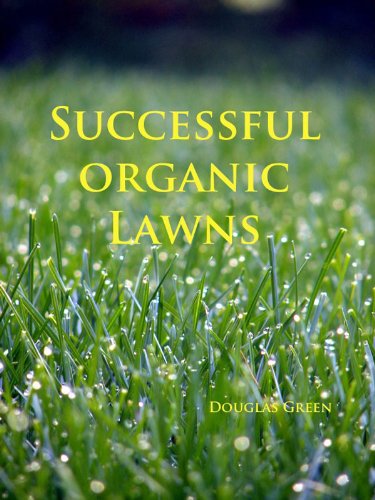
Successful Organic Lawns (Landscaping Book 2)
Best for: Converting to organic turf
Aimed at homeowners switching from chemical programs who need a clear transition plan.
Pros:
- Organized around lawn-specific projects
- Practical conversion steps
Cons:
- Older title, so check current product recommendations
The Perfect Lawn – Your Complete Guide to a Healthy, Green Yard

The Perfect Lawn – Your Complete Guide to a Healthy, Green Yard: Step-by-Step Lawn Manual for the Everyday Homeowner – 2026 edition
Best for: Beginners
Written as a step-by-step manual for everyday homeowners who want a clear sequence to follow through the year.
Pros:
- Easy-to-follow sequence
- Recent 2026 edition
Cons:
- Less depth on advanced soil science
Scotts Lawns: Your Guide to a Beautiful Yard

Scotts Lawns: Your Guide to a Beautiful Yard
Best for: Traditional reference
Useful as a broad reference shelf book for readers who want general lawn information alongside organic-leaning advice.
Pros:
- Broad coverage of grass types and care
- Easy to browse
Cons:
- Chemical-based recommendations appear in places
Related reading
- Watershed Organic Lawn Care: A Step-by-Step Guide for Bee-Safe Yards
- Velvet Green Organic Lawn Care: A Step-by-Step Guide for Bee-Friendly Yards
- Top 6 Organic Lawn Care Crabgrass Products Worth Considering in 2026
About Ethan Brooks
Ethan Brooks is part of our editorial team and reviews and edits our pollinator-safe lawn care guides, checking product details against manufacturer specifications and owner feedback.