
 By Emily Parker
Updated November 2026
Teachers, homeschool parents, and garden clubs searching for pollinator garden lesson plans usually want something they can use with children this week, not a stack of theory. This list focuses on published books and card sets that combine hands-on activities, clear learning goals, and plant or insect identification. We favored titles with specific, age-appropriate lessons, clear structure, and owner feedback that mentions classroom or home use. Nothing here was tested in a classroom by us.
Best overall: The Pollinator Garden Planning Deck – View on Amazon
Best for elementary classrooms: Garden Curriculum Lesson Plans – View on Amazon
Best for fall-season units: Fall Garden Curriculum – View on Amazon
Best for read-aloud storytime: My Pollinator Garden – View on Amazon
Best for native plant identification: Pollinators of Native Plants – View on Amazon
Our Top Picks
| Product | Best for | Key feature |
|---|---|---|
| The Pollinator Garden Planning Deck | Planning a habitat with kids | 109 cards, full habitat design |
| Garden Curriculum: Lesson Plans | Elementary classrooms | Structured garden-based lessons |
| Fall Garden Curriculum | Autumn garden units | Seasonal lesson sequence |
| My Pollinator Garden | Read-aloud sessions | Narrative pollinator storytelling |
| Pollinators of Native Plants | Identification activities | Native plant and insect guide |
The Pollinator Garden Planning Deck: Build a Thriving Habitat for Bees, Birds, and Butterflies (A 109-Card Box Set)

The Pollinator Garden Planning Deck: Build a Thriving Habitat for Bees, Birds, and Butterflies (A 109-Card Box Set)
Best for: Planning a habitat with kids from the ground up.
This suits families and teachers who want a planning-first activity, with students choosing plants, layouts, and food sources for different pollinators.
Pros
- Large card set gives many discussion prompts
- Covers bees, birds, and butterflies together
Cons
- Works best with a plot or container to plan around
Garden Curriculum: Lesson Plans for Elementary School and Home Schooling

Garden Curriculum: Lesson Plans for Elementary School and Home Schooling
Best for: Elementary classrooms needing structured garden lessons.
Best for teachers who need ready-to-run sequences they can adapt to a school garden or a few raised beds.
Pros
- Lessons organized for classroom pacing
- Works for home schooling as well
Cons
- Pollinator focus is one part of a broader garden curriculum
Fall Garden Curriculum: Garden Lesson Plan for Elementary School and Homeschooling

Fall Garden Curriculum: Garden Lesson Plan for Elementary School and Homeschooling
Best for: Autumn garden units and seasonal planning.
Useful for educators who want to connect pollinator habitat with late-season planting, seed saving, and bulb preparation.
Pros
- Clear seasonal focus for September through November
- Fits into an existing fall science unit
Cons
- Less coverage of spring and summer pollinator activity
My Pollinator Garden: How I Plant for Bees, Butterflies, Beetles, and More (Books for a Better Earth)

My Pollinator Garden: How I Plant for Bees, Butterflies, Beetles, and More (Books for a Better Earth)
Best for: Read-aloud sessions before a hands-on activity.
Best for early elementary readers and younger children who respond better to story than to worksheets.
Pros
- Engaging narrative makes a good opener
- Covers several insect types beyond bees
Cons
- Not a lesson plan on its own; pair it with activities
Pollinators of Native Plants: Attract, Observe and Identify Pollinators and Beneficial Insects with Native Plants
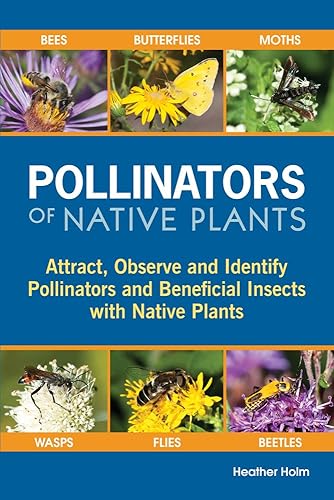
Pollinators of Native Plants: Attract, Observe and Identify Pollinators and Beneficial Insects with Native Plants
Best for: Native plant and insect identification activities.
Suited to older students and gardeners who want to observe specific pollinators on specific native plants.
Pros
- Strong identification focus for field observation
- Ties pollinators directly to native plant choices
Cons
- Text-heavy for the youngest learners
Buying Guide
Match the grade level
Check whether the activities suit your students’ reading level and attention span. Card sets and storybooks work better for younger children, while identification guides fit older students.
Look for hands-on activities
Plans that include planting, observation logs, or small field tasks tend to hold attention longer than lecture-only material. Look for lessons with a clear step and a clear outcome.
Check the seasonal timing
Pollinator activity changes across the year. A fall unit and a spring unit cover different plants and insects, so pick material that matches when your class or family will be outside.
Focus on native plants
Lessons that tie pollinators to native plants give children a practical link between what they see and what they can plant at home or school.
Good picks for this: Garden Curriculum: Lesson Plans and Pollinators of Native Plants
FAQ
What age are pollinator garden lesson plans best for?
Many are written for elementary students, roughly ages 6 to 11, but storybooks can work for preschoolers and identification guides suit older learners.
Do I need a garden to use these lesson plans?
No. Many activities can be run with a few pots, a windowsill, or observation of local insects, though a planting area makes the lessons more concrete.
Can these plans be used for homeschooling?
Yes. Several of the titles above are explicitly written for home schooling as well as classrooms, and most activities adapt easily to one or two children.
Related reading
- Small Pollinator Garden Plan: A Step-by-Step Guide for Bee-Friendly Yards
- Layout Pollinator Garden Design Plans: A Practical Guide (2026)
- How to Plan a Pollinator Garden: A Step-by-Step Guide for Bee-Friendly Yards
- 6 Best Pollinator Garden Planting Plans (2026): Our Picks
- 3 Season Pollinator Garden: Plan Blooms From Spring to Fall
- What to Put in a Pollinator Garden: A Step-by-Step Guide for Bee-Friendly Yards
About Emily Parker
Emily Parker is part of our editorial team and reviews and edits our pollinator-safe lawn care guides, checking product details against manufacturer specifications and owner feedback.


