
 By Emily Parker
Updated November 2026
If you’re asking what’s the best lawn fertilizer for your yard, the honest answer is that it depends on your grass type, your climate, your season and how much lawn you’re covering. A product that greens up a cool-season fescue lawn in spring may not suit a warm-season Bermuda or St. Augustine yard in the South, and a fall formula is built for a different job than a summer feeder. This guide compares five widely sold granular lawn fertilizers from Scotts and The Andersons. Our selection criteria were product specifications stated on the label, brand reputation, coverage area, suitability for specific grass types and the kinds of feedback owners commonly report. We did not test these products ourselves, so treat the picks below as a research-based shortlist rather than hands-on verdicts.
Our top picks at a glance
- 1
 TOP CHOICEBest overallScotts Green Max Lawn FoodView on Amazon
- 2
 TOP CHOICEBest for large lawnsThe Andersons Professional PGF Complete 16-4-8 Fertilizer with 7% Humic DGView on Amazon
- 3
 TOP CHOICEBest for all grass typesScotts Turf Builder Lawn Food for All Grass TypesView on Amazon
- 4
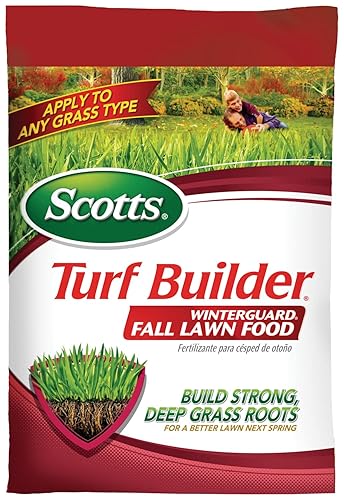 Best for fall feedingScotts Turf Builder WinterGuard Fall Lawn FoodView on Amazon
- 5
 Best for Southern lawnsScotts Turf Builder Southern Lawn FoodView on Amazon
Our Top Picks
Quick Comparison
| Product | Best for | Key feature |
|---|---|---|
| Scotts Green Max Lawn Food | Overall lawn greening | Includes iron for deeper green color |
| The Andersons Professional PGF Complete 16-4-8 | Large lawns and professional-style feeding | Contains humic material and a 16-4-8 analysis |
| Scotts Turf Builder Lawn Food | Mixed grass types | Labeled for all grass types |
| Scotts Turf Builder WinterGuard Fall Lawn Food | Fall root and winter preparation | Formulated for autumn application |
| Scotts Turf Builder Southern Lawn Food | Warm-season Southern lawns | Labeled for Southern grasses |
Scotts Green Max Lawn Food
Lawn Fertilizer for Grass Plus Iron Supplement, Grass Fertilizer, Covers 5,000 sq. ft. Scotts Green Max Lawn Food, 16.67 lbs.
Best for: Overall lawn greening with added iron
This is a good starting point for homeowners who want a single everyday fertilizer that targets color and steady growth across a typical residential lawn. It fits well in a standard feeding schedule through the growing season.
Key specs
- Listed coverage: 5,000 sq. ft.
- Package weight: 16.67 lbs.
- Includes iron supplement for color
Pros
- Iron addition supports a deeper green look without a surge of top growth
- Large bag covers a substantial yard
- Widely available and easy to find for reapplication
Cons
- Synthetic formula, so it is not an organic option
- Owners with sensitive pets or pollinator concerns may want a different product
Bottom line: A strong pick for homeowners who want reliable color from a mainstream, all-season granular feed.
The Andersons Professional PGF Complete 16-4-8 Fertilizer with 7% Humic DG
The Andersons Professional PGF Complete 16-4-8 Fertilizer with 7% Humic DG 5,000 sq ft
Best for: Large lawns that need a balanced, higher-potassium feed
This suits homeowners with larger properties who want a granular fertilizer with a plant-food analysis of 16-4-8 and humic material. It is aimed at those comfortable calibrating a spreader for bigger areas.
Key specs
- Listed coverage: 5,000 sq. ft.
- Analysis: 16-4-8 (nitrogen, phosphate, potash)
- Contains 7% humic DG
Pros
- Potassium content supports overall turf resilience
- Humic component is intended to help with nutrient retention
- Good match for larger properties
Cons
- Higher nitrogen and potassium numbers mean careful spreader settings are important
- Not an organic product
Bottom line: Best for owners of larger lawns who want a balanced analysis and are comfortable measuring application rates.
Scotts Turf Builder Lawn Food for All Grass Types
Fertilizer for Grass, For All Grass Types, Covers 5,000 sq. ft. Scotts Turf Builder Lawn Food, 12.5 lbs.
Best for: Mixed lawns where the grass type is unknown or varied
If your yard has a blend of grasses, or you simply are not sure what you have, a product labeled for all grass types removes one variable from the decision. It is a practical everyday choice for a general residential lawn.
Key specs
- Listed coverage: 5,000 sq. ft.
- Package weight: 12.5 lbs.
- Labeled for all grass types
Pros
- Broad labeling takes guesswork out of product choice
- Smaller bag is easier to handle than a large sack
- Familiar brand with wide retail availability
Cons
- Synthetic formula, not suited to strict organic programs
- A general formula may not be as tuned to a specific season as a seasonal product
Bottom line: A sensible default for homeowners with a mixed lawn who want one bag that works across the board.
Scotts Turf Builder WinterGuard Fall Lawn Food
Lawn Fertilizer for All Grass Types, Covers 4,000 sq. ft., Autumn Lawn Care Scotts Turf Builder WinterGuard Fall Lawn Food, 10 lbs.
Best for: Fall feeding to prepare roots for winter
Cool-season lawn owners often focus on fall feeding because grass stores energy in its roots during autumn. This formula is designed for that late-season window rather than summer growth.
Key specs
- Listed coverage: 4,000 sq. ft.
- Package weight: 10 lbs.
- Labeled for all grass types, for autumn application
Pros
- Timed for the fall window when many lawns benefit most
- Smaller bag suits smaller yards
- Clear seasonal labeling makes scheduling simpler
Cons
- Coverage is smaller than the larger Scotts bags
- Not intended as a summer or year-round product
Bottom line: Ideal as the final feeding of the year for cool-season lawns, rather than as your only fertilizer.
Scotts Turf Builder Southern Lawn Food
Grass Fertilizer for Lawns with Southern Grasses, 5,000 sq. ft. Scotts Turf Builder Southern Lawn Food, 14.06 lbs.
Best for: Warm-season lawns in the South
Bermuda, zoysia, centipede and St. Augustine lawns respond to feeding on a different calendar than fescue or bluegrass. This product is labeled for Southern grasses, so it fits homeowners in warmer regions.
Key specs
- Listed coverage: 5,000 sq. ft.
- Package weight: 14.06 lbs.
- Labeled for Southern grasses
Pros
- Grass-type labeling matches warm-season needs
- Good coverage for typical Southern yards
- Easy to find and reorder
Cons
- Not suited to cool-season northern lawns
- Synthetic formula, so it is not an organic option
Bottom line: The right pick for warm-season lawns, but a poor fit if your grass is a cool-season type.
Buying Guide
Match the Fertilizer to Your Grass Type
Cool-season grasses such as tall fescue, Kentucky bluegrass and perennial ryegrass grow best in spring and fall. Warm-season grasses such as Bermuda, zoysia and St. Augustine peak in summer. A product labeled for your grass type avoids feeding at the wrong time or in the wrong amount.
Good picks for this: Scotts Turf Builder Lawn Food, Scotts Turf Builder Southern Lawn Food
Read the N-P-K Analysis
The three numbers on a bag show the percentage of nitrogen, phosphate and potash. Nitrogen drives leaf growth and color, phosphorus supports roots, and potassium supports stress tolerance. Higher numbers are not automatically better; they tell you how concentrated the product is.
Good picks for this: The Andersons Professional PGF Complete 16-4-8, Scotts Green Max Lawn Food
Check Coverage Against Your Lawn Size
Bags list coverage in square feet. Measure your lawn, subtract beds and hardscape, and buy enough for one full application. Undersized bags lead to uneven results, and oversized purchases can sit in storage with reduced effectiveness.
Good picks for this: The Andersons Professional PGF Complete 16-4-8, Scotts Turf Builder WinterGuard Fall Lawn Food
Choose the Right Season
Spring feeding supports new growth, summer formulas are often lower in nitrogen to reduce heat stress, and fall feeding helps roots store energy for winter. Matching the bag to the season is one of the simplest ways to improve results.
Good picks for this: Scotts Turf Builder WinterGuard Fall Lawn Food, Scotts Green Max Lawn Food
Consider Iron and Micronutrients
Iron can deepen green color without pushing excessive top growth, which means less mowing. Look for micronutrients on the label if your soil is known to be deficient, and consider a soil test before adding extra supplements.
Good picks for this: Scotts Green Max Lawn Food
Think About Organic Versus Synthetic
Synthetic granular products release nutrients quickly and are predictable to apply. Organic products often release more slowly and build soil biology over time. If you care about pollinators, pets or soil life, check the ingredient list and labeling carefully before buying.
Good picks for this: Scotts Turf Builder Lawn Food, The Andersons Professional PGF Complete 16-4-8
Use Proper Application Practices
Calibrate your spreader using the instructions on the bag, water the lawn after application as the label directs, and sweep any granules off hard surfaces to keep them out of storm drains. Follow label rates rather than applying extra in hopes of faster results.
Good picks for this: Scotts Green Max Lawn Food, The Andersons Professional PGF Complete 16-4-8
FAQ
What is the best lawn fertilizer for most homeowners?
For a general residential lawn with unknown or mixed grass, a product labeled for all grass types is a practical starting point. Scotts Turf Builder Lawn Food and Scotts Green Max Lawn Food are both broadly labeled options.
How often should I fertilize my lawn?
Most granular lawn fertilizers are applied several times a year, often spaced several weeks apart during the growing season. Always follow the schedule and rate printed on the specific bag, since timing differs between cool-season and warm-season grasses.
Is a fall fertilizer different from a spring one?
Yes. Fall products are formulated to support root growth and winter storage in cool-season lawns, while spring products emphasize new leaf growth. Using the wrong formula at the wrong time can be less effective.
Can I use one fertilizer for both cool-season and warm-season grass?
Some products are labeled for all grass types, which can work across a mixed lawn. However, warm-season and cool-season grasses have different feeding calendars, so a grass-specific product usually gives more predictable results.
Do I need to water after applying lawn fertilizer?
Many granular products recommend watering after application to move nutrients into the root zone and reduce the risk of granules sitting on the leaves. Check the label for the specific instruction on your bag.
Is an organic fertilizer better than a synthetic one?
It depends on your goals. Organic products often feed soil life and release nutrients more slowly, while synthetic products are more concentrated and predictable. Neither is automatically superior for every lawn.
How do I know if my soil needs fertilizer?
A soil test from a local extension service is the most reliable way to find out which nutrients are low. Testing helps avoid over-applying nutrients your lawn does not need.
Conclusion
There is no single answer to what’s the best lawn fertilizer for every yard. For most general lawns, Scotts Green Max Lawn Food offers a well-rounded everyday feed with added iron. Owners of larger properties who are comfortable calibrating a spreader may prefer The Andersons Professional PGF Complete 16-4-8. If your grass type is unknown or mixed, Scotts Turf Builder Lawn Food removes that uncertainty. Homeowners with cool-season lawns should consider Scotts Turf Builder WinterGuard Fall Lawn Food for autumn feeding, while those in the South with warm-season grass will find Scotts Turf Builder Southern Lawn Food better matched to their conditions. Start by identifying your grass type and season, then choose the product that fits.
Sources
- Research-based guidance on lawn grass types, fertilizer timing and soil testing from university extension programs (extension.org)
- Information on fertilizer runoff, water quality and proper application practices (epa.gov)
- Background on soil nutrients and sustainable turf management practices (usda.gov)
Related reading
- Nature's Best Organic Lawn Fertilizer: 7 Best Picks for Bee-Safe Lawns (2026)
- 5 Best Jobe's Organic Lawn Fertilizer Picks for a Bee-Safe Lawn (2026)
- Scotts Organic Lawn Fertilizer Ingredients: What's Inside and Is It Bee-Safe?
- What's a Good Natural Weed Killer? A Step-by-Step Guide for Lawns and Beds
- Vigoro Organic Lawn Fertilizer: 6 Best Picks Compared for 2026
- Top 6 Organic Lawn Fertilizers with Phosphorus for Bee-Safe Lawns
- Top 6 Organic Lawn Fertilizers with Mycorrhizae for Bee-Safe Lawns
About Emily Parker
Emily Parker is part of our editorial team and reviews and edits our pollinator-safe lawn care guides, checking product details against manufacturer specifications and owner feedback.



