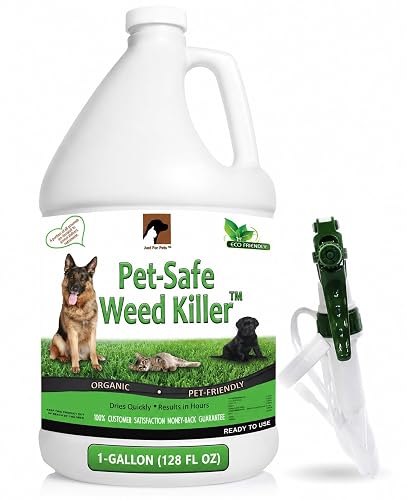
By Nora Ashford
A natural weed killer made from salt, vinegar and dish soap can knock back dandelions, plantain and other broadleaf weeds in a single day, without synthetic herbicides. This guide walks you through the ingredients, mixing ratios, application method and the mistakes that cause the most trouble, so you can use a natural weed killer salt vinegar soap mix safely around lawns, beds and paving. You will also learn where this mix works well, where it will damage plants you want to keep, and how to protect bees and other pollinators while you work.
How a Natural Weed Killer Salt Vinegar Soap Mix Works
Each ingredient does a different job, and understanding them helps you decide when the mix is the right tool. Household vinegar is acetic acid, typically around 5 percent in the grocery store variety. Acetic acid burns the leaf surface and dries out the tissue it touches. Table salt, or sodium chloride, draws water out of plant cells and can linger in soil, which is why it is useful on hard surfaces but risky near garden beds. Dish soap, usually a mild surfactant, breaks the waxy cuticle on leaves so the liquid spreads and sticks instead of beading off.
Shopping for one? See our guide: Natural Weed Killer with 30 Vinegar: 7 Best Picks Compared (2026).
The result is a contact herbicide. It damages the parts of the plant it touches, which is why it is strongest on young, small weeds with lots of exposed leaf surface. It does not reliably kill established perennials with deep root systems, because the top growth can regrow from the roots. Expect to treat repeatedly.
Ingredients and Tools You Need
Gather these supplies before you mix anything. Use a dedicated spray bottle or a garden sprayer and label it clearly so no one mistakes it for something else.
- Plain white vinegar, 5 percent acetic acid (horticultural vinegar at 20 percent is much stronger and calls for protective gear)
- Table salt or coarse sea salt, dissolved fully in the liquid
- Liquid dish soap without degreasers or added antibacterial agents
- A 1-quart or 2-liter spray bottle, or a 1- to 2-gallon pump sprayer
- Nitrile gloves and safety glasses
- A funnel and a measuring cup
- A stiff brush or hoe for pulling weeds before treatment
Step-by-Step Mixing Ratios
Ratios vary across guides, and stronger is not always better. Start with a moderate mix and adjust only if weeds do not respond after two applications.
Basic Hard-Surface Mix
- Pour 1 quart of white vinegar into the spray bottle.
- Add 1 tablespoon of table salt and stir or shake until fully dissolved.
- Add 1 teaspoon of liquid dish soap. Swirl gently rather than shaking hard, which creates foam that clogs nozzles.
- Label the bottle with the contents and the date.
Stronger Mix for Tough Weeds on Pavement
- Use 1 gallon of white vinegar, 1 cup of salt and 2 tablespoons of dish soap in a pump sprayer.
- Mix in a bucket first to dissolve the salt, then pour into the sprayer.
- Use only on cracks in concrete, gravel or brick walkways where no desirable plants grow nearby.
Salt accumulates in soil over time and can prevent growth for years. Never use the stronger mix within the root zone of trees, shrubs or garden plants.
Application Method for Best Results
Timing and technique matter more than strength. Vinegar-based products work fastest on sunny, dry days when the leaves are open and actively taking up moisture.
Choose the Right Conditions
- Apply in the morning on a day with temperatures between 60 and 85°F.
- Avoid rain for at least 24 hours after spraying.
- Skip windy days to prevent drift onto nearby plants.
Spray Thoroughly but Precisely
- Set the nozzle to a stream or a narrow cone rather than a fine mist, which drifts.
- Coat the leaves until they are wet but not dripping heavily.
- Target the weed only. Shield nearby grass or flowers with a piece of cardboard.
- Recheck after 24 to 48 hours. Most annual broadleaf weeds show browning within one to three days.
Follow Up on Regrowth
Perennial weeds such as dandelions, bindweed and creeping Charlie often return. Pull the entire root where the soil is loose, then respray any new growth. Plan on several rounds across a growing season rather than one application.
Where This Mix Works and Where It Does Not
| Situation | Suitability | Notes |
|---|---|---|
| Cracks in driveways and walkways | Good | Stronger mix works well; no planting nearby |
| Gravel paths | Good | Use basic or stronger mix, spray carefully |
| Young annual weeds in beds | Fair | Shield mulch and desirable plants; use basic mix |
| Established perennial weeds | Limited | Expect regrowth; requires repeated treatment |
| Lawns with mixed grass and broadleaves | Poor | Vinegar and salt can damage grass and soil |
| Near trees, shrubs or vegetable gardens | Avoid | Salt and acid can harm roots and soil life |
Protecting Pollinators and Soil
A natural weed killer is still a biological hazard to some organisms if misused. Spray when bees are less active, which generally means early morning or evening, and never spray open flowers, even weeds. Clover and dandelion blooms are a valuable early nectar source, so consider leaving a few patches untouched in the yard. Keep the salt mix off soil in beds, since salt builds up and can stunt soil microbes and plant roots for seasons. If you want a gentler approach for lawns, look at the options covered in Natural Weed Killer Safe for Grass: 7 Best Picks Compared (2026) and Natural Weed Killer Mix: 7 Best Options for Pollinator-Safe Lawns.
Safety Precautions
Vinegar at household strength is mildly irritating, but salt and soap mixtures can still sting eyes and skin. Wear gloves and eye protection. Store the mix in a clearly labeled container away from children and pets, and keep it out of food storage areas. Do not use horticultural-strength vinegar without gloves, a respirator where recommended, and full eye protection. If you have pets that graze on lawns or walk on treated paving, wait until the surface is dry and rinse with water before they return. For pet-specific questions, review Natural Weed Killer for Dogs: 7 Best Pet-Safe Picks (2026) and consult your veterinarian if an animal has contact with a concentrated mixture.
Common Mistakes
- Using too much salt. Excess salt builds up in soil and can prevent plant growth for a long time.
- Spraying in the heat of the day. Hot sun can cause fast leaf burn, but the mix may evaporate before it works on roots.
- Expecting one application to kill perennials. Roots store energy and regrow, so plan for follow-up sprays.
- Using a detergent with degreasers. Strong surfactants can change how the mix behaves and may leave residue.
- Forgetting to label the bottle. Unlabeled sprayers cause accidents, especially in shared garden sheds.
- Spraying near desirable plants. Drift can burn foliage you did not mean to treat.
Tips for Better Results
- Pull weeds when the soil is moist to get as much root as possible.
- Mix fresh before each use, since the soap and vinegar can separate over time.
- Treat weeds when they are young, usually within the first few weeks of growth.
- Combine spraying with mulch or dense plantings to reduce new weed seeds sprouting.
- Keep a simple log of which weeds respond and which return, so you can adjust your approach.
Recommended gear
A few tools make mixing and application cleaner and safer. Choose items that suit how much area you need to cover.
- Pump sprayer for larger areas. A pressurized sprayer holds more solution and gives you a steady stream, which helps with precise application along walkways. View on Amazon
- Adjustable-nozzle handheld spray bottle. A bottle with a stream setting lets you target single weeds without spraying neighboring plants. View on Amazon
- Nitrile gloves. Nitrile holds up to acidic solutions better than thin latex and protects skin during mixing. View on Amazon
- Stirrup or stand-up weed puller. Removing roots before spraying reduces the number of repeat treatments you need. View on Amazon
FAQ
Does a natural weed killer salt vinegar soap mix kill weeds permanently?
It usually kills the top growth of young annual weeds but not always the roots of established perennials. Repeated treatments and manual root removal give the best long-term control.
How long should I wait before planting after spraying?
Salt residue can persist in soil for a long time, so avoid planting in areas treated with the stronger mix. For basic vinegar and soap sprays on surfaces, wait until the leaves are fully brown and the area has dried before sowing or transplanting nearby.
Will the mix hurt grass in my lawn?
Yes, it can burn grass blades and damage soil if you spray broadly. Spot-treat individual weeds and avoid saturating turf.
Is dish soap safe to use in a weed killer?
Plain liquid dish soap is commonly used as a surfactant in home mixes. Avoid products with added degreasers, bleach or antibacterial agents, and check the label for any additional warnings.
Can I use this mix on weeds in vegetable gardens?
It is not recommended. Salt and acid can persist in soil and affect nearby crops. Mulch, hand-pulling or stale-seedbed methods are safer choices in edible gardens.
Is this mix safe for pets?
Keep pets off treated areas until everything has dried and been rinsed. If a pet contacts a concentrated mix or ingests it, contact your veterinarian or a poison control service promptly.
How often should I reapply?
Reapply to new growth every few days to a week during the active season. Stronger, established weeds may need four to six treatments before they decline.
Does horticultural vinegar work better than household vinegar?
Higher-concentration acetic acid works faster, but it is more hazardous to handle and can cause serious eye and skin damage. For most home users, standard household vinegar is the safer starting point.
Conclusion
A natural weed killer salt vinegar soap mix is a practical option for sidewalk cracks, gravel and young weeds in beds when used with care. Match the strength to the job, spray in calm weather, and protect nearby plants, soil and pollinators. For lawns and perennial weeds, expect repeated treatments or consider a combined approach. If you have health concerns or a pet or child may come into contact with the mixture, talk with a qualified professional before proceeding.
Related reading
- Natural Weed and Grass Killer Vinegar: A Practical Guide (2026)
- 7 Best Vinegar as Natural Weed Killer Options for Lawns and Gardens (2026)
Ready to choose one?

About Nora Ashford
Nora covers pollinator-safe lawn care, comparing specs, features and long-term owner feedback to help readers choose with confidence.