
 By Emily Parker
Updated November 2026
Potassium helps grass handle heat, drought, foot traffic and winter cold, and organic lawn fertilizer with potassium is one of the simplest ways to get it into the soil without synthetic salts. This list compares five products that supply potassium for lawns, judged on how well each one fits a bee-safe, chemical-free program. Criteria include the potassium source, whether the product is designed for lawn use, ease of application, and how well the listing matches the way owners actually use it.
Our top picks at a glance
- 1
 TOP CHOICEBest overallCountryMax 50LB Potash Fertilizer for Lawn & Garden PlantsView on Amazon
- 2
 TOP CHOICEBest for liquid feedingSimple Lawn Solutions High Potassium Lawn Food 0-0-25View on Amazon
- 3
 TOP CHOICEBest for potassium-only dosingMuriate of Potash 0-0-60 Fertilizer Made in USAView on Amazon
- 4
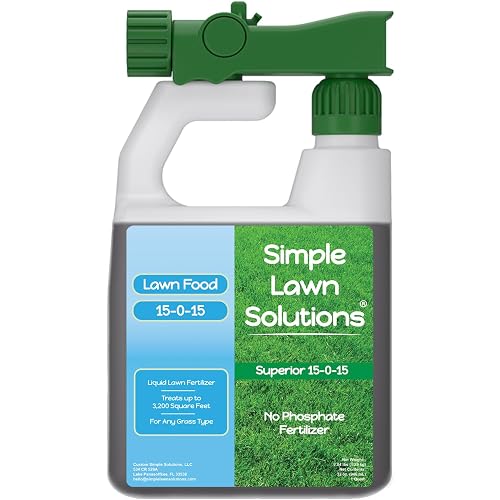 Best for a balanced liquid feedSuperior 15-0-15 Liquid Lawn FertilizerView on Amazon
- 5
 Best for fall feedingUltimate 3-18-18 NPK Lawn FoodView on Amazon
Our Top Picks
| Product | Best for | Key feature |
|---|---|---|
| CountryMax 50LB Potash Fertilizer | Overall lawn potassium | Bulk potash, large areas |
| Simple Lawn Solutions High Potassium 0-0-25 | Liquid feeding | Concentrated spray, 32 oz |
| Muriate of Potash 0-0-60 | Potassium-only dosing | Highest potassium percentage |
| Superior 15-0-15 Liquid Lawn Fertilizer | Balanced liquid feed | Nitrogen plus potassium blend |
| Ultimate 3-18-18 NPK Lawn Food | Fall and root support | High potassium with phosphorus |
CountryMax 50LB Potash Fertilizer for Lawn & Garden Plants
High Potassium Formula to Support Strong Root Development, Improved Plant Health, Better Yields, and Vibrant Lawns & Gardens CountryMax 50LB Potash Fertilizer for Lawn & Garden Plants
Best for: Overall lawn potassium
A good fit for owners with larger lawns who want a bulk potassium source they can spread with a broadcast spreader.
Pros
- Large bag suits big properties
- Marketed for root development and plant health
Cons
- Requires accurate spreading to avoid streaks
Simple Lawn Solutions High Potassium Lawn Food 0-0-25
Simple Lawn Solutions – High Potassium Lawn Food Liquid Fertilizer 0-0-25 – Concentrated Spray – Turf Grass Vigor and Plant Hardiness – Summer and Fall – Any Grass Type (32 Ounce)
Best for: Liquid feeding
Suited to owners who prefer a hose-end or pump sprayer and want to feed potassium in summer and fall.
Pros
- Concentrated spray is quick to mix
- Listed for any grass type
Cons
- Liquid needs reapplication more often than granules
Muriate of Potash 0-0-60 Fertilizer Made in USA
Muriate of Potash 0-0-60 Fertilizer Made in USA – MOP Potassium Plant Food for Indoor/Outdoor Plants, Flower Gardens, Fruit and Vegetable Gardens, Holistic Herbs, Trees and Green Lawns!
Best for: Potassium-only dosing
Best for gardeners who already use a separate nitrogen source and want to correct potassium levels precisely.
Pros
- High potassium percentage for targeted correction
- Works for lawns, beds and vegetable gardens
Cons
- Not a complete lawn fertilizer on its own
Superior 15-0-15 Liquid Lawn Fertilizer
Superior 15-0-15 Liquid Lawn Fertilizer – Lawn Food for Growth & Green – Nitrogen, Potassium, Humic, Fish & Seaweed – Any Grass Type- Simple Lawn Solutions – All Season- Attached Sprayer (32 Ounce)
Best for: Balanced liquid feed
Works for owners who want nitrogen and potassium together in one liquid feeding.
Pros
- Nitrogen and potassium in one product
- Attached sprayer for simple application
Cons
- Blend may not suit yards that test high in nitrogen
Ultimate 3-18-18 NPK Lawn Food
Ultimate 3-18-18 NPK- Lawn Food Quality Liquid Fertilizer- Easy to Use Concentrated Spray- Any Grass Type- Summer & Fall Nutrients- Simple Lawn Solutions – Turf Hardiness & Root Vigor (32 Ounce)
Best for: Fall and root support
A fit for owners focused on fall root growth and winter hardiness.
Pros
- Higher phosphorus and potassium for roots
- Concentrated spray for easy mixing
Cons
- Low nitrogen, so pair with a nitrogen source in spring
Buying Guide
Check the potassium source
Potash and muriate of potash are mined mineral sources, while some liquid lawn foods add potassium with plant and seaweed extracts. Read the label to confirm which form you are buying and whether it fits your organic program.
Match the form to your application method
Granules work well with broadcast spreaders for large lawns, while concentrated liquids suit hose-end sprayers. Pick the form you will apply consistently.
Consider your soil test
Potassium needs vary by soil. A soil test from your state extension service shows whether you need potassium before you buy. Applying more than the soil needs wastes product and can cause salt stress.
Time applications to the season
Potassium supports stress tolerance, so many lawns benefit from feeding in late spring, summer and fall. Avoid heavy feeding during drought or extreme heat.
Good picks for this: CountryMax 50LB Potash Fertilizer and Ultimate 3-18-18 NPK Lawn Food
FAQ
Can potassium fertilizer harm bees?
Potassium fertilizers are generally not toxic to bees, but avoid spraying flowering clover or blooming weeds during application. Water in granules and keep product off open blooms.
How much potassium does a lawn need?
Requirements depend on soil test results, grass type and climate. Your state extension service can tell you what rate fits your lawn.
Related reading
- Top 5 Organic Lawn Fertilizers for Sale Worth Considering in 2026
- Top 5 Organic Fertilizers for Lawn Picks Compared for Bee-Safe Yards
- Scotts Organic Lawn Fertilizer Ingredients: What's Inside and Is It Bee-Safe?
- Safe Organic Lawn Fertilizer: A Step-by-Step Guide for Bee-Safe Lawns
- Purely Organic Lawn Fertilizer Ingredients: What to Look For (Step-by-Step)
About Emily Parker
Emily Parker is part of our editorial team and reviews and edits our pollinator-safe lawn care guides, checking product details against manufacturer specifications and owner feedback.


