Quick answer
Choosing the right clover for your lawn depends on your goals for height, flowering, and foot traffic. For a low, manicured look, microclover is a top choice. For a more traditional, resilient bee-friendly lawn, white clover is excellent.
Incorporating clover into your lawn is one of the most effective steps you can take to create a pollinator-friendly yard. But not all clover is the same, and picking the right variety makes all the difference in achieving the look and function you want. This guide will help you compare the main types of clover for lawns, focusing on practical selection criteria like height, bloom time, and durability, so you can make an informed choice for your space.
Key Traits to Compare in Lawn Clover Varieties
When selecting clover, think of it like choosing any other plant for your garden. You need to match its natural characteristics to your lawn’s conditions and your maintenance preferences. The main factors to consider are the mature height and growth habit, the density of the cover it provides, its flowering schedule and appeal to pollinators, and its ability to withstand foot traffic and recover from wear.
For a broader look at how clover fits into a sustainable lawn strategy, see our article on Clover Lawns Explained. If you’re considering other low-growing options beyond clover, our guide to Bee-Friendly Ground Cover Options is a great resource.
Popular Types of Clover for Lawns
Here, we break down the most common clover varieties used in residential lawns across different climates in the United States.
Microclover (Trifolium repens var.)
Microclover is a specially bred selection of white clover. Its key selling point is its diminutive size. It grows lower, with smaller leaves and fewer flowers than standard white clover, making it ideal for homeowners who want the benefits of clover but prefer a more uniform, manicured lawn appearance.
- Height & Habit: Typically stays very low, often blending seamlessly with turfgrass at a cutting height of 3-4 inches. It has a dense, compact growth pattern.
- Flowers & Pollinators: Produces fewer white flower heads than standard clover, but they are still highly attractive to bees when they bloom. Flowering can be minimized with more frequent mowing.
- Durability & Use: Tolerates moderate foot traffic and recovers well. It’s an excellent choice for front yards, play areas, and lawns where a neat aesthetic is a priority while still supporting pollinators.
White (Dutch) Clover (Trifolium repens)
This is the classic clover most people picture. White clover is a reliable, vigorous perennial that has been a component of healthy lawns for generations before the rise of weed-free monocultures.
- Height & Habit: Grows slightly taller than microclover, usually between 4-8 inches if left unmowed. It spreads by creeping stolons, filling in bare spots effectively.
- Flowers & Pollinators: Prolific producer of white, globe-shaped flower heads from late spring through summer. It is a superb nectar source for honey bees, bumble bees, and other native pollinators. For more on integrating flowers into your grass, see Low-Growing Flowering Plants for a Blooming Lawn.
- Durability & Use: Very durable and tolerant of foot traffic. It handles compaction better than many turfgrasses. Perfect for backyards, pathways, and full-sun areas where a more natural, flowering lawn is desired.
Other Varieties to Consider
While micro and white clover are the most common, other types can serve specific purposes.
- Strawberry Clover (Trifolium fragiferum): Tolerates wet, saline, or alkaline soils better than white clover. Its pink-tinged flowers add a subtle color variation.
- Red Clover (Trifolium pratense): A taller, biennial or short-lived perennial often used in meadows and pasture mixes. It’s generally too tall (12-24 inches) for a traditional lawn but is a fantastic pollinator plant for designated wilder areas or as a cover crop.
What to look for
- Mowing Height: Choose microclover for a low-cut lawn (2.5-4″) or white clover for a higher-cut (3-4″) or occasionally unmowed lawn.
- Flower Power: White clover offers the most abundant blooms for bees; microclover offers a more subdued flower display.
- Soil & Sun: Most clovers thrive in full sun to part shade and adapt to various soils, but check variety specifics for poor drainage or pH tolerance.
- Traffic Tolerance: Both micro and white clover are durable, but for high-traffic areas, ensure your seed mix or variety is marketed for lawn use.
- Climate Hardiness: Consult the USDA Plant Hardiness Zone Map. White and microclover are generally hardy in a wide range of zones.
How to Choose: Decision Guide
Use this simple comparison to narrow down your choice of clover types for your lawn project.
| Consideration | Choose Microclover If… | Choose White Clover If… |
|---|---|---|
| Primary Goal | A uniform, turf-like appearance with subtle clover benefits. | A visibly bee-friendly, flowering lawn with maximum pollinator support. |
| Mowing Preference | You mow regularly (weekly) and prefer a shorter lawn height. | You mow less frequently or are okay with a slightly taller, natural look. |
| Foot Traffic | Moderate traffic (family yard, occasional play). | Moderate to high traffic (pathways, active play areas). |
| Soil Challenges | Standard lawn soils; it enriches soil but isn’t for extreme conditions. | Standard to slightly poor soils; for wet/saline soil, look at strawberry clover. |
Remember, you can also mix clover varieties or combine them with grasses and other low-growing flowers. Explore the full category of Ground Covers for more ideas on creating a diverse, resilient lawn ecosystem.
Safety
Clover is non-toxic and safe for children and pets to play on. However, clover flowers attract bees. If anyone in your household has a severe bee sting allergy, take appropriate precautions, such as mowing flowers before gatherings. Always follow pesticide label directions. If you ever need to treat for other pests, choose targeted products and apply them when bees are not actively foraging (early morning or late evening). Never apply insecticides to blooming clover. For more, see the EPA’s pollinator protection guidance.
FAQ: Choosing Clover for Your Lawn
Can I mix microclover and white clover?
Absolutely. Many homeowners do this to get a blend of low-growing foliage and more abundant flowers. You can buy pre-mixed seeds or create your own blend. The plants will coexist well, with the microclover staying lower and the white clover providing more floral display.
Will clover take over my grass?
Clover is not invasive in the ecological sense, but it is persistent and will spread within your lawn. In a mixed clover-grass lawn, it finds its balance, often thriving in areas where grass struggles. If you want a pure clover lawn, it will form a dense mat that crowds out other plants. The goal for most is a balanced mix where both grass and clover coexist.
How often do I need to mow a clover lawn?
Mowing frequency depends on the look you want. For a tidy lawn with microclover, mow weekly at a height of 3-4 inches to keep it compact and minimize flowers. For a white clover lawn where you want to enjoy the blooms, you can mow every 2-3 weeks, or even just a few times a season, cutting at about 4 inches. Always follow the general rule of never removing more than one-third of the leaf blade at a time.
Is clover drought tolerant?
Yes, clover is generally more drought-tolerant than traditional cool-season turfgrasses like Kentucky bluegrass. Its deep taproot can access water deeper in the soil profile. During extended drought, it may turn brown but will typically green up again with rainfall. It helps improve the drought resilience of your overall lawn.
Where can I buy clover seed for lawns?
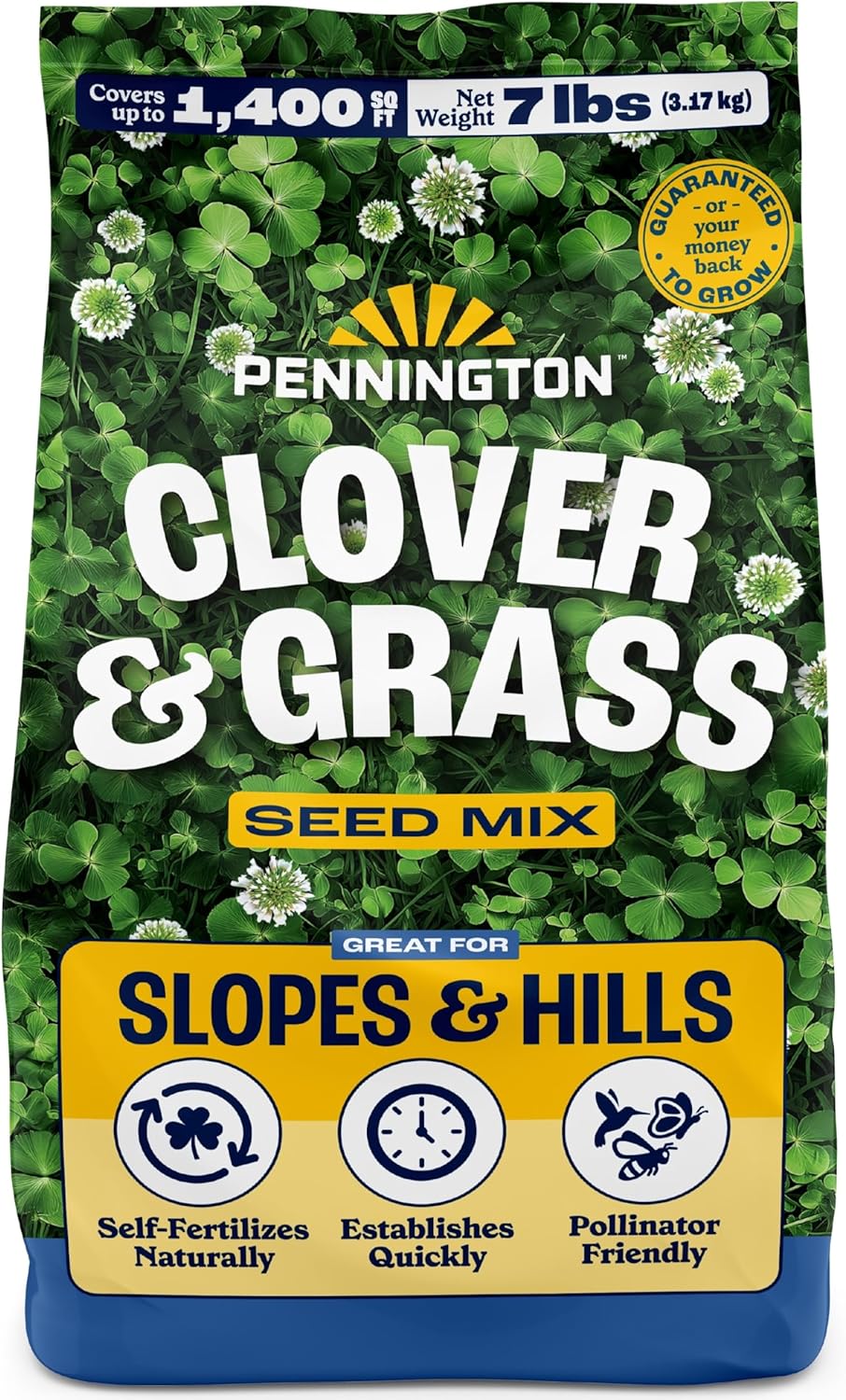
Clover seed is widely available at garden centers, farm supply stores, and online retailers. Look for seed labeled specifically for lawn use. When purchasing, check the seed tag for purity and germination rates, and ensure the variety is suited for your region’s climate. You can find more pollinator-friendly planting ideas in our main Pollinator-Friendly Plants guide.
References
- USDA Agricultural Research Service: USDA Plant Hardiness Zone Map for climate guidance. https://planthardiness.ars.usda.gov/
- U.S. Environmental Protection Agency: Guidance on pesticide use and pollinator protection. https://www.epa.gov/pollinator-protection
- The Xerces Society for Invertebrate Conservation: Resources on pollinator conservation. https://www.xerces.org/pollinator-conservation
- Manufacturer manuals and specification sheets: For specific seeding rates and variety characteristics.