By Claire Whitaker
If you are looking for a natural weed killer instead of Roundup, the short answer is this: a horticultural vinegar-based spray wins for most homeowners who want fast visible results on driveway cracks and garden beds, boiling water wins for targeted spot treatment where you want zero residue, and an organic herbicide formulated with fatty acids or clove oil is the better pick for lawns where you need the most reliable results without glyphosate. Each option has trade-offs in speed, cost of repeat applications and risk to nearby plants, so the right choice depends on where the weeds are and how much collateral damage you can tolerate.
How the Options Compare at a Glance
Before comparing individual criteria, here is a side-by-side view of the three main categories of natural weed killer people switch to when they move away from Roundup. Glyphosate-based products are included as the baseline so you can see exactly what changes.
| Criterion | Roundup (glyphosate) | Vinegar-based spray (horticultural strength) | Boiling water | Organic fatty-acid or clove oil herbicide |
|---|---|---|---|---|
| Active ingredient | Glyphosate | Acetic acid (commonly 20% or higher) | Heat | Fatty acids, clove oil or citric acid |
| Speed of visible results | Several days to two weeks | Often within hours on young weeds | Immediate on contact | Usually within 24 hours on young weeds |
| Effect on established perennial roots | Strong, systemic | Weak; top growth only | Weak; top growth only | Weak to moderate; top growth only |
| Risk to nearby grass and plants | High if sprayed carelessly | High; non-selective | High; non-selective | Moderate to high; non-selective |
| Residual activity in soil | Minimal for glyphosate itself, but label-dependent | None | None | None |
| Pollinator risk when applied correctly | Debated; avoid during bloom | Low once dry, but can burn flowers on contact | Very low once cooled | Low once dry; avoid spraying open blooms |
| Best use | Large, established infestations | Driveways, patios, garden edges | Cracks and spot treatment | Lawns and beds needing a non-glyphosate product |
Speed of Results: Which Option Works Fastest?
Winner: horticultural vinegar and boiling water, for different reasons.
Roundup works systemically, meaning it moves through the plant to the roots. That takes time, usually several days to two weeks before you see full browning and die-back. Natural options work differently. They damage the leaf and stem tissue on contact, so the effect is quick but it is limited to what they touch.
Boiling water is the fastest of all. Once poured, the damage is immediate and visible within minutes on annual weeds such as chickweed, crabgrass seedlings and dandelion rosettes. Vinegar-based sprays typically show wilting within a few hours on warm, sunny days. Owners often report that vinegar works best when applied in direct sun on a dry, hot afternoon, since the acid is more aggressive in heat. Organic herbicides with fatty acids or clove oil usually show results within about a day on seedlings, but they tend to need a second application on larger weeds.
Manufacturers of horticultural vinegar generally specify a concentration of 20 percent or higher acetic acid for garden use. Household vinegar at 5 percent is far less effective and is usually not enough to kill established weeds.
Long-Term Control of Deep-Rooted Weeds: Which Option Lasts?
Winner: Roundup, if long-term control of perennials is your only goal. Among natural options, the organic herbicides with a broader formulation edge out vinegar and boiling water.
This is where natural weed killers fall short, and it is important to be honest about it. Dandelions, plantain, thistle, bindweed and Canada thistle have deep taproots or rhizomes. Acetic acid, heat and fatty acid sprays burn off the leaves but do not reliably reach the root system. Owners often report that dandelions regrow from the crown within one to three weeks after a single vinegar treatment.
For perennial weeds, you will likely need repeat applications every few days to a week over several weeks, and in some cases you will need to combine methods. Digging out taproots by hand after rain, when the soil is soft, is still one of the most effective approaches for a few deep-rooted weeds. Mulching heavily with wood chips or cardboard beneath a layer of soil starves weeds of light and reduces regrowth over a season.
If you want to dig deeper into what kills roots specifically, our guide to 8 Best Natural Weed Killer That Kills Roots for Lawns and Beds in 2026 covers the formulations that perform best on deep-rooted weeds. For a broader look at non-chemical methods, see All Natural Weed Killer: 7 Methods That Work Without Chemicals (2026).
Safety for Pets, Children and Pollinators: Which Is Gentlest?
Winner: boiling water, for the lowest residue risk. Organic fatty-acid and clove oil products come next for pet-safe spot use.
Roundup carries label warnings about eye and skin irritation, and it has been the subject of significant regulatory and legal debate over its health effects. Anyone with concerns about exposure, especially households with young children or pregnant people, should consult a healthcare professional or a poison control resource before making decisions about chemical use.
Boiling water leaves no chemical residue. The main risk is scalding, so keep pets and children away while you pour, and never use it near a hose or in a way that could splash. Vinegar is non-toxic to pets in small amounts, but concentrated horticultural vinegar is a skin and eye irritant and can cause stomach upset if ingested. Keep it locked away and rinse surfaces after application. For dogs specifically, our roundup on Natural Weed Killer for Dogs: 7 Best Pet-Safe Picks (2026) compares options with that in mind.
For pollinators, the picture is more nuanced. Spraying flowering weeds, including clover and dandelions that bees forage on, can expose insects directly. Most natural herbicides are safest to apply in the early morning or evening, when bees are less active, and only once the spray has dried. Avoid spraying open blooms entirely. If you are building a bee-friendly yard, our piece on Natural Weed Killer Safe for Grass: 7 Best Picks Compared (2026) discusses which products are gentler on the plants you want to keep.
Effect on Desirable Grass and Plants: Which Protects Your Lawn?
Winner: none of the natural options is selective. Boiling water and vinegar damage whatever they touch. Organic herbicides are marginally more forgiving on established turf, but no natural product will spare a lawn if it is over-applied.
Glyphosate is also non-selective, so the difference here is smaller than many people expect. Roundup is usually sprayed onto weeds with a shield or applicator to avoid overspray onto grass, and the same discipline applies to natural products. Use a wand or handheld applicator aimed at individual weeds, and keep the spray off the grass blades.
Vinegar and boiling water are especially risky near lawn edges where grass roots run under pavement. Owners often report yellowing or browning in turf they did not intend to treat after a windy day of spraying. If your goal is to kill weeds in a lawn while keeping the grass alive, our guide to Natural Weed Killer Without Killing Grass (2026): Which Should You Choose? explains the timing and technique that help.
Cost of Repeat Applications and Ease of Use: Which Is Practical?
Winner: a ready-to-use horticultural vinegar spray or organic herbicide for convenience, and boiling water for the lowest material cost on small areas.
Concentrated horticultural vinegar is usually sold ready to use in sprayers. Because you may need to reapply every few days, the material adds up on large areas. Boiling water requires only a kettle or pot, but on a large patio it is impractical, and you will need to heat and carry many batches. Organic herbicides sit in the middle: more expensive per application than household ingredients, but they are formulated to stick to leaves and tend to need fewer passes than plain vinegar.
For homeowners who want to mix their own, many people ask about recipes. Be aware that homemade mixes vary widely in acetic acid strength, and results are inconsistent. Our guide to Natural Weed Killer Mix: 7 Best Options for Pollinator-Safe Lawns looks at prepared options, and Diy All Natural Weed Killer (2026): Which Should You Choose? covers the homemade approach and its limits.
Residual Activity and Soil Health: Which Leaves the Least Behind?
Winner: boiling water and vinegar, which leave no residue in the soil once they have dried. Organic herbicides are also non-persistent but can carry additional ingredients depending on the formulation.
Glyphosate binds to soil particles and breaks down over time, with its persistence depending on soil type, temperature and microbial activity. Natural options do not persist in the same way. Acetic acid is quickly neutralized by soil, and boiling water simply cools to ambient temperature. Repeated vinegar use can slightly lower soil pH near the surface, so avoid applying it to beds where you plan to grow acid-sensitive plants.
Heavy, repeated applications of any product can affect soil life. Keeping the ground covered with mulch or living groundcover reduces how often you need to spray, which is the most effective way to protect the soil long term.
Which Should You Choose?
- You have a large, established patch of perennial weeds in a lawn: Expect repeat applications of an organic herbicide, and plan on combining it with hand digging. Roundup still wins on root kill, but natural options can get you there with more effort.
- You want to clear weeds from driveway cracks, patio joints or gravel: Horticultural vinegar is the practical choice. It is fast, cheap to apply and well suited to non-planted areas. Our piece on Boiling Water vs Vinegar: Natural Weed Killer for Between Patio Stones (2026) compares the two for exactly this job.
- You have pets or small children and need the gentlest option: Boiling water on cracks and organic fatty-acid products for spot treatment are the safest picks. Store all products out of reach.
- You are protecting a bee-friendly yard: Spray only in the early morning or evening, avoid open blooms and choose low-residue products. Check the label for pollinator guidance.
- You want to avoid chemicals entirely and can accept slower results: Combine hand weeding, mulching and boiling water spot treatment over a full growing season.
- You want a ready-made product with a clear label: Look for an organic herbicide formulated for lawns or beds, and follow the directions on the package exactly.
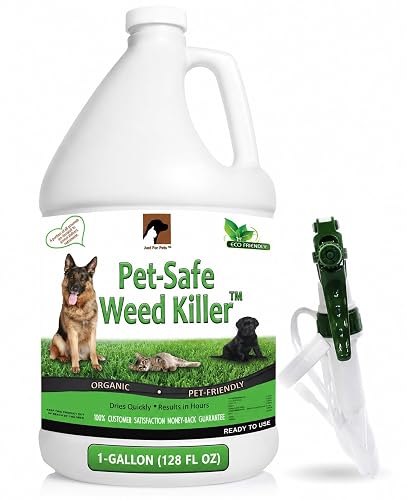
You can also browse specific product types. Organic herbicides formulated for lawns and beds are available on Amazon, and our list of 8 Best Organic Natural Weed Killer Options for Lawns and Beds (2026) compares the most-discussed ones. For concentrated vinegar, see 8 Best Natural Weed and Grass Killer Vinegar Options for Lawns and Beds (2026).
Product options for each category:
Roundup (glyphosate) baseline: View on Amazon
Horticultural vinegar spray: View on Amazon
Boiling water: View on Amazon
Organic fatty-acid herbicide: View on Amazon
FAQ
Does natural weed killer work as well as Roundup?
On young annual weeds, natural options often work quickly, sometimes within hours. On established perennials with deep roots, Roundup generally gives more complete control because it moves through the plant. Natural products usually need repeat applications and may only kill top growth. Set your expectations accordingly, and consider combining methods for stubborn weeds.
Is vinegar safe to use around pets?
Diluted household vinegar is non-toxic in small amounts, but concentrated horticultural vinegar is a skin and eye irritant and can upset the stomach if ingested. Keep pets off treated areas until the spray has fully dried and the surface has been rinsed where practical. If your pet has been exposed to a large amount or shows symptoms, contact a veterinarian or a pet poison helpline right away.
When is the best time of day to apply natural weed killer?
Early morning or late evening is generally best for both effectiveness and pollinator safety. Bees are less active in cool conditions, and the spray has time to dry before they forage. Vinegar tends to work better on hot, sunny days, so the trade-off is between pollinator safety and speed of action. Avoid spraying in wind or before rain.
Will boiling water kill the roots of weeds?
Boiling water kills the top growth and can damage roots close to the surface, especially on seedlings. It is generally not reliable for deep taproots or rhizomes. For perennial weeds, expect regrowth and plan on digging out the root or repeating the treatment several times.
Can I use natural weed killer near my vegetable garden?
All of these options are non-selective, so they will damage vegetable plants if they touch the foliage. Apply with a shield or handheld applicator, keep the spray away from crops, and avoid applying on windy days. Boiling water is the safest choice for weeds growing right next to vegetables, since you can pour it precisely.
Conclusion
For most readers looking for a natural weed killer instead of Roundup, there is no single winner. Horticultural vinegar and boiling water are the best choices for hardscape and cracks, where fast results and zero residue matter most. Organic fatty-acid herbicides are the most practical option for lawns and beds where you need a ready-to-use product. Roundup still has the edge on deep-rooted perennials, but that comes with trade-offs in residue and exposure that many homeowners want to avoid. Match the product to the job, apply in the right conditions, and expect to combine methods over a season. Anyone with health concerns about chemical exposure should speak with a healthcare professional before choosing a product.
Related reading
- Roundup Natural Weed Killer: 7 Best Picks Compared (2026)
- Natural Weed Killer vs Roundup (2026): Which Is Better for Your Lawn?
- What's a Good Natural Weed Killer? A Step-by-Step Guide for Lawns and Beds
About Claire Whitaker
Claire Whitaker is part of our editorial team and reviews and edits our pollinator-safe lawn care guides, checking product details against manufacturer specifications and owner feedback.