As an Amazon Associate I earn from qualifying purchases. This page may contain affiliate links.
Clover seed for lawn use is one of the simplest ways to build a yard that feeds bees, needs less nitrogen fertilizer, and stays green through dry spells. In this guide you will learn which clover types work best, how to prepare soil and sow the seed at the right rate and time, and how to keep the stand thick and flowering without synthetic inputs. Along the way you will find a checklist, a seeding reference table, common mistakes to avoid, and answers to the questions homeowners ask most.
Why Clover Seed for Lawn Makes Sense
Clover is a legume. Its root nodules host bacteria that pull nitrogen from the air and make it available to the grass growing around it. Over a season, a healthy clover stand can supply a meaningful share of the nitrogen a lawn needs, which is why many organic gardeners treat it as a living fertilizer. Its flowers also provide pollen and nectar when many other lawn plants have finished, and that matters for honey bees, bumble bees, and native solitary bees alike.
Clover is also forgiving. It tolerates foot traffic better than many turf-type ryegrasses, it stays green when rainfall is spotty, and it crowds out some weeds by filling bare patches. Owners often report that a mixed stand looks lush within one or two growing seasons, though results depend on soil, sun, and mowing habits.
Choosing the Right Clover Type
Not every clover belongs in a lawn. Tall, aggressive types can look shaggy and shade out the grass, while very short types may not flower enough to help pollinators. Most lawn-oriented seed mixes lean on a few well-known species:
- White clover (Trifolium repens): The standard choice. It stays low, spreads by stolons, tolerates mowing, and produces white flowers that bees visit heavily.
- Micro clover (Trifolium repens var. ‘Pirouette’ type or similar microclover cultivars): A smaller-leafed white clover with a denser, finer texture. It blends well with turf and is often used where a fine lawn look is wanted.
- Dutch clover: A low-growing white clover traditionally used in mixes for its tight growth and steady cover.
- Red clover (Trifolium pratense): Taller and showier, with pink-purple flowers. It suits meadow edges more than a mowed lawn, and it is usually left out of frequently cut turf.
For most yards, a white or micro clover blend is the practical starting point. If you are weighing specific cultivars, see Choosing the Right Clover Variety for Your Lawn for a closer comparison. You can also browse Best White Clover Seed for Lawns to see which seed types are commonly recommended.
Step 1: Assess Your Site
Clover performs best in full sun to light shade, roughly four to six hours of direct light per day. Dense shade under large trees will thin it out, and the grass in those areas may do better as a separate zone.
Test your soil before you seed. Clover prefers a pH between about 6.0 and 7.0. If the pH is well below 6.0, add lime according to the test recommendation. Good drainage matters as well, since waterlogged soil encourages root rot. For a deeper look at soil basics, read Soil Health for Home Lawns: The Basics.
Step 2: Prepare the Seedbed
Clover seed is small and needs good contact with soil. Preparation is where most success is decided.
Remove Existing Growth
For an existing lawn, mow short, rake out thatch, and aerate if the soil is compacted. For a bare patch or a renovation, scalp the area and loosen the top two to three inches of soil with a rake or tiller.
Improve the Soil
A thin layer of finished compost, about a quarter inch, improves structure and adds microbial life. Work it into the top inch or so. Read Using Compost to Improve Soil for a Bee-Friendly Lawn for application rates and timing.
Step 3: Sow the Seed
Use a seeding rate close to what the manufacturer specifies for your mix. Clover is typically sown at a much lighter rate than grass, and over-seeding wastes seed and encourages crowding. A broadcast spreader, set to a low setting, gives the most even coverage. Several lawn seed spreaders suit this job, and 29 Best Lawn Seed Spreaders for Clover covers the options.
After spreading, lightly rake the seed into the top eighth of an inch, or roll the area so the seed presses into the surface. Clover seed needs light to germinate, so do not bury it deeply.
Timing
Early fall and early spring are the most reliable windows in most of the US. Soil is warm enough for germination but competition from summer weeds is lower. Sowing in late spring works too if you can keep the seedbed moist.
Step 4: Water for Germination
Keep the top half inch of soil consistently moist until seedlings are established, usually two to three weeks. Water lightly once or twice a day rather than soaking deeply once, because the seed sits near the surface. Once roots are established, shift to deeper, less frequent watering. If you irrigate on a schedule, Setting Up a Watering Timer for a Healthy Lawn explains how to set one up.
Step 5: Mow and Maintain
Keep your mower blade sharp and set it high. Mowing at about three to four inches favors grass and clover both and gives the clover enough leaf area to feed the roots. Frequent low cutting weakens clover. See What Is the Ideal Mowing Height for a Pollinator-Friendly Lawn? for more detail.
Leave clippings on the lawn when possible. They return nitrogen and moisture to the soil. Avoid heavy synthetic nitrogen, which can push grass to outcompete clover.
Seeding Reference Table
| Task | Typical guidance |
|---|---|
| Soil pH target | About 6.0 to 7.0 |
| Light needed | 4 to 6 hours direct sun, or light shade |
| Seed depth | Surface to about 1/8 inch |
| Germination watering | Light moisture, once or twice daily, 2 to 3 weeks |
| Mowing height | About 3 to 4 inches |
| Best seeding windows | Early fall or early spring |
Always follow the seed package label for exact rates, since mixes vary.
Checklist: What You Need
- Clover seed or a lawn seed mix containing clover, matched to your site
- Soil test kit or local extension test
- Rake, dethatching tool, or core aerator
- Finished compost (optional, about a quarter inch)
- Broadcast spreader
- Garden hose with a gentle spray nozzle
- Sharp mower blade and a high cutting setting
Tips for Success
- Sow clover where you want it. Broadcasting onto a thick, healthy grass stand usually leads to poor germination, so thin or scalp first.
- Inoculated seed can help on sites where clover has never grown. Check the label.
- Give new stands time. Clover fills in over one to two seasons.
- Watch for flowers and time mowing around bee activity. See Safely Timing Lawn Treatments Around Pollinator Activity.
Common Mistakes
- Sowing too deep. Clover seed needs light and surface contact. Burying it is a leading cause of failure.
- Letting the seedbed dry out. A single dry day during germination can kill a flush of seedlings.
- Using heavy nitrogen fertilizer. Grass will outgrow the clover. Lean feeding favors a clover-grass balance.
- Mowing too short. Scalping stresses clover and removes flower buds.
- Ignoring soil pH. Acidic soil slows growth even when seed is sown correctly.
Recommended gear
- Broadcast spreader: A spreader with fine calibration makes it easier to apply light clover rates evenly. View on Amazon
- Soil test kit: A simple pH and nutrient kit helps you confirm whether lime is needed before sowing. View on Amazon
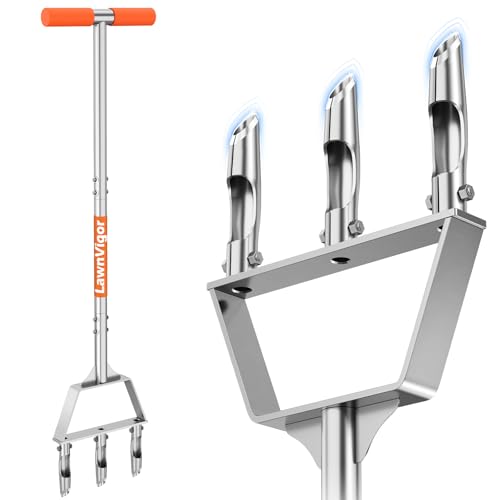
- Core aerator: Relieving compaction creates seed-to-soil contact, especially on established lawns. View on Amazon
FAQ
Can I plant clover seed in an existing lawn?
Yes, through overseeding. Mow low, rake to loosen the surface, and sow lightly. Expect patchier results than a fresh seedbed, but clover will spread into thin areas over time.
How long does clover take to establish?
Germination usually takes one to two weeks under moist conditions. A visibly thick stand often takes one to two growing seasons.
Will clover take over my grass?
Clover tends to fill thin spots rather than replace healthy turf, especially with regular mowing and moderate feeding. Balance depends on your management.
Is clover safe for pets and kids?
White clover is generally considered low risk, but some animals may react to large amounts. If you have concerns, consult a veterinarian or your local extension office.
Do bees really visit lawn clover?
Yes. White clover flowers are a well-known nectar and pollen source for honey bees and bumble bees. Visits are most common when flowers are open and the lawn is not recently treated with pesticides.
When should I stop mowing clover flowers?
Many owners raise the mower height or skip mowing during peak bloom, which lets bees forage. Mowing afterward resets the cycle.
Should I use herbicide to kill broadleaf weeds before sowing?
Avoid broad-spectrum products that could harm clover seedlings. Mechanical removal and good mowing are safer choices. For options, see Lawn Weed Management Without Routine Broad-Spectrum Spraying.
Conclusion
Clover seed for lawn use is a practical way to add nitrogen, flowers, and resilience to your yard. Choose a suitable type, prepare a clean seedbed, sow lightly in early fall or spring, and keep the soil moist until seedlings are established. With high mowing and lean feeding, your lawn will support bees and need less synthetic input season after season.