As an Amazon Associate I earn from qualifying purchases. This page may contain affiliate links.
Getting rid of clover on lawn areas is mostly a matter of changing the conditions that favor it. In this guide you will learn how to identify clover, decide whether you actually want it gone, and remove it using hand-pulling, mowing adjustments, soil corrections and targeted spot treatments. Most homeowners can cut clover coverage substantially within one growing season without reaching for broad-spectrum chemicals.
First, Decide Whether You Really Want Clover Gone
Clover is one of the most useful plants in a low-input lawn. White clover fixes nitrogen from the air, stays green during dry spells, and produces nectar that bees and other pollinators visit. Many readers who search for ways of getting rid of lawn clover actually have a narrower problem: patchy spread into a turf area where they want a uniform grass color, or a species that is spreading into beds and walkways. Before you start, make a clear decision about your goal.
If you want a grass-dominant lawn but are happy to keep some clover, you can aim for reduction rather than elimination. A reasonable target for many yards is to keep clover below roughly 20 to 30 percent of ground cover so that grass still forms the main canopy. If you are converting to a mixed or pollinator-focused lawn, you may choose to keep it entirely. For background on the trade-offs, read Clover Lawns Explained and Weed or Wildflower? A Lawn Gardener’s Guide.
Identify the Clover You Have
Correct identification matters because different clovers respond to different controls. The two you will most often see are white clover (Trifolium repens) and the yellow-flowered black medick, which looks similar at a glance but is an annual with yellow flower heads and a small, sometimes dark spot on each leaflet. Hop clover and other clovers appear occasionally. For help telling them apart, see Lawn Weed Identification and Choosing the Right Clover Variety for Your Lawn.
- White clover: perennial, creeps by stolons, three round leaflets often with a faint pale chevron, white or pinkish globe flowers.
- Black medick: annual or short-lived, yellow flower clusters, leaflets with a small tip notch, seeds in small black coiled pods.
- Hop clover: small yellow flower heads that look like tiny hops, often in drier, poorer soil.
Step 1: Build a Clover-Removal Toolkit
You will need only a few basic items for the mechanical steps. Gather these before you begin:
- A weed puller or dandelion fork for taproot-style removal
- A hand trowel or narrow spade for digging out stolon mats
- A rake (leaf or thatch rake) to loosen debris and expose runners
- A soil thermometer or screwdriver to check soil compaction and moisture
- A notebook or phone photos to track patch locations season to season
Step 2: Hand-Pull Clover in Moist Soil
Hand-pulling works best after a rain or deep watering, when roots release more easily. White clover spreads by stolons, so you need to remove the runner and as much of the root crown as you can. Grip the plant near the soil surface and pull slowly to keep the stolon attached.
How to Pull Clover Effectively
- Water the area lightly the day before, or wait for rain.
- Slide a weed puller or narrow trowel under the crown and lever gently.
- Remove the entire mat if possible, including any rooted nodes.
- Fill the hole with a little topsoil or compost and tamp it lightly.
- Overseed bare spots with grass seed suited to your region (see Step 5).
Hand-pulling is slow, but it is effective for small patches and scattered plants. Expect to repeat it every few weeks for the first season, because any fragment left behind can regrow.
Step 3: Adjust Your Mowing Height
Clover is shade-tolerant only to a point, and it struggles to compete when grass is kept at a healthy height. Raising the mower deck gives grass blades more leaf area to shade the soil surface, which limits the light clover needs to establish. For most cool-season lawns, 3 to 4 inches is a practical range; warm-season grasses often do well at 2 to 3 inches. The guide What Is the Ideal Mowing Height for a Pollinator-Friendly Lawn? covers the reasoning in more detail.
Mow often enough that you never remove more than one-third of the blade length at once. Keep blades sharp, since ragged cuts stress turf and open space for clover to spread. If you are aiming to keep some clover while suppressing dominance, you can mow slightly higher to favor grass without eliminating blooms entirely.
Step 4: Correct Soil Conditions That Favor Clover
Clover tends to take over lawns that are low in nitrogen, compacted, or have uneven moisture. Fixing those underlying conditions shifts the advantage back to turf grass. Start with a soil test, which will show pH and nutrient levels. Clover often thrives in soils that are slightly acidic and low in available nitrogen. Use the steps in How to Test Your Lawn’s Soil for a Healthy Pollinator Habitat and Soil Health for Home Lawns: The Basics to guide amendments.
- Feed grass with slow-release organic nitrogen in the grass’s active growing season so it outcompetes clover.
- Aerate compacted areas once or twice a year. See Lawn Aeration for Better Soil Health and Pollinator Support.
- Top-dress with compost to improve structure and microbial activity. Reference Using Compost to Improve Soil for a Bee-Friendly Lawn.
- Water deeply but less often so grass roots grow deeper and clover’s shallower roots are stressed in dry spells. A watering schedule can help; see Setting Up a Watering Timer for a Healthy Lawn.
Step 5: Overseed to Fill Gaps
Bare soil is an invitation for clover, so once you remove patches, fill them with grass seed. Choose a turf-type grass blend that suits your climate and sun exposure. Rake the area to expose soil, scatter seed at the rate listed on the bag, cover lightly with compost or topsoil, and keep the surface moist until germination. Limit traffic on new seedlings. Seeding in early fall for cool-season grasses or late spring for warm-season grasses usually gives the best results.
Step 6: Use Spot Controls Only When Needed
When clover covers a large share of the lawn and mechanical methods are not keeping up, selective spot treatment may be appropriate. Choose products labeled for clover control in lawns, follow the label exactly, and apply only to affected spots rather than the whole lawn. Organic-approved options exist, but they often need repeat applications and work best on young plants. Before using any product, check the bloom schedule and read Safely Timing Lawn Treatments Around Pollinator Activity, since spraying during bloom can harm bees. Also review Responsible Lawn Product Selection. If you are unsure which product fits your situation, consult your local cooperative extension office.
A Seasonal Calendar for Clover Control
| Season | Main Task | Why It Helps |
|---|---|---|
| Early spring | Hand-pull young clover; rake and assess bare spots | Seedlings are small and easy to remove |
| Late spring | Raise mower height; apply slow-release nitrogen | Grass grows strongly and shades clover |
| Summer | Water deeply; mow high; spot-treat only if necessary | Stressed clover declines while deep-rooted grass persists |
| Early fall | Aerate, top-dress with compost, overseed bare areas | Cool-season grass recovers and fills gaps before winter |
| Late fall | Map problem areas; test soil | Plan next year’s amendments and treatments |
Common Mistakes to Avoid
- Pulling only the top growth. Stolons and root crowns regrow if left in the soil.
- Mowing too short. Scalping favors clover because it reaches sunlight faster than grass.
- Leaving bare soil. Empty patches get recolonized within weeks.
- Applying nitrogen unevenly or at the wrong time. Heavy late-summer feeding can push grass growth while leaving weak spots.
- Treating during bloom. Spraying flowering clover can expose bees and other pollinators.
- Expecting instant results. Shifting the balance usually takes one full growing season.
Tips for Long-Term Success
- Walk the lawn once a week during spring and early summer to catch new patches early.
- Keep a simple log of where clover appears and what you did, so you can see patterns.
- Consider whether a mixed clover-grass lawn might suit your goals better than a monoculture. Review Pollinator-Friendly Lawn Alternatives and How to Start a Pollinator Lawn.
- If clover is part of a broader weed problem, see Managing Flowering Weeds in Your Lawn and Lawn Weed Management Without Routine Broad-Spectrum Spraying.
Recommended gear
These tools make the mechanical steps faster and more reliable.
- Fiskars Stand-Up Weeder: lets you pull clover runners without bending, which helps you remove more of the root crown. View on Amazon
- Garden hand trowel with depth markings: useful for digging out stolon mats and checking how deep roots extend. View on Amazon
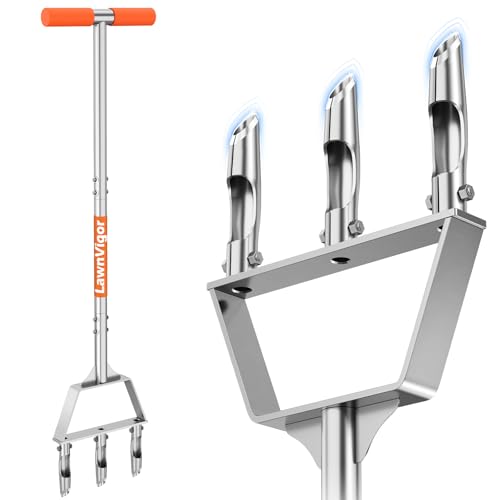
- Manual core aerator: relieves compaction that favors clover on heavy soils. View on Amazon
- Compost spreader: makes it easier to top-dress thin areas evenly. View on Amazon
FAQ
Will clover kill my grass?
Clover does not usually kill grass outright. It competes for light and space, and in thin or stressed turf it can dominate, leaving grass patchy. Correcting mowing, nitrogen and compaction usually restores balance.
Why does clover keep coming back after I pull it?
White clover spreads by stolons and seeds, and fragments left in the soil can regrow. Removing the whole crown, filling gaps with grass and reducing bare soil all reduce recurrence.
Is clover bad for bees?
Clover is a valuable nectar and pollen source for bees. The main concern is pesticide exposure during bloom, so avoid spraying flowering clover and follow label directions carefully.
Does clover add nitrogen to my lawn?
Yes. Clover hosts nitrogen-fixing bacteria in its roots, which can supply some nitrogen to nearby grass. Removing clover may therefore increase your need for supplemental fertilizer.
When is the best time to get rid of clover?
Early spring, before heavy bloom, is ideal for mechanical removal. Fall is the best time to overseed and aerate, since cool-season grass recovers well then.
Can I use vinegar or salt to kill clover?
These can damage surrounding grass and soil, and salt can persist and harm plants for years. They are not recommended for lawns. Use targeted, label-approved methods instead, and consult a local extension office if you are unsure.
How long does clover removal take?
Most lawns show a meaningful reduction within one growing season when the steps are followed consistently. Heavily infested lawns may need two or three seasons.
Should I hire a professional?
If clover covers most of the lawn or soil problems are severe, a licensed lawn care professional or your local cooperative extension office can recommend a tailored plan.
Conclusion
Getting rid of clover on lawn areas comes down to removing what you can by hand, raising mowing height, correcting soil and feeding conditions, and filling bare patches quickly. Decide first whether you want full removal or reduction, then work through the seasonal calendar consistently. Use spot treatments only when needed, and always protect pollinators by avoiding applications during bloom.