As an Amazon Associate I earn from qualifying purchases. This page may contain affiliate links.
Using clover as a lawn means replacing or mixing turfgrass with low-growing clover species that stay green through summer, need less nitrogen and feed bees from spring through fall. In this guide you will learn how to decide whether a clover lawn fits your yard, how to prepare the soil, how to sow and establish the stand, and how to mow and maintain it so it stays dense and healthy without synthetic fertilizers or broad-spectrum herbicides.
Why Choose Clover as a Lawn?
Clover is a legume. Its roots host nitrogen-fixing bacteria, which means the plant pulls nitrogen from the air and makes it available in the soil. That is the main reason a clover lawn usually needs little or no added nitrogen, while a traditional grass lawn often depends on several feedings a year. The flowers also provide nectar and pollen for honeybees, bumblebees, solitary bees and hoverflies across a long bloom window.
Clover tolerates foot traffic reasonably well, stays greener during dry spells than many cool-season grasses, and crowds out some broadleaf weeds because it forms a dense mat. It is not a perfect substitute for every lawn. It can be more uneven in color, it attracts bees when in bloom (which matters if children or pets play barefoot or if you have bee allergies), and it needs a few specific management habits. Those trade-offs are worth weighing before you commit.
Clover Lawn vs. Traditional Grass
| Feature | Traditional Turf Grass | Clover Lawn |
|---|---|---|
| Nitrogen needs | Regular synthetic or organic feeding | Usually minimal, since clover fixes its own |
| Summer color | Often browns without irrigation | Tends to stay greener in drought |
| Pollinator value | Very low | High while flowering |
| Foot traffic | Handles heavy use well | Handles moderate use; can flatten with heavy play |
| Uniformity | Very uniform when maintained | More natural texture; some patchiness |
| Mowing | Frequent at standard heights | Mow higher to protect flowers and roots |
Choosing the Right Clover Species
Not all clovers behave the same in a lawn. Most homeowners work with three types, and the right choice depends on your climate, sun exposure and how much traffic the area gets.
- White clover (Trifolium repens): The standard lawn clover. It is low-growing, spreads by stolons and handles moderate foot traffic. Look for low-growing, dwarf or lawn-type cultivars.
- Micro clover (Trifolium repens var. Pirouette-type or similar small-leaf selections): Smaller leaves and a finer texture that blend more easily with grass. It mows down more neatly and produces a denser carpet.
- Dutch clover: A form of white clover with a compact habit that is often sold for lawn mixes. It is a good fit for regular mowing and sunny sites.
For a deeper look at cultivars, see Choosing the Right Clover Variety for Your Lawn and Best White Clover Seed for Lawns. If you want a finer, more carpet-like finish, Micro Clover Seed for Lawn: How to Sow It for a Lush, Bee-Friendly Yard covers that option in detail.
Step 1: Assess Your Site
Before you buy seed, spend a week observing your yard. Clover does best where it gets at least four to six hours of direct sun per day, though many varieties tolerate light shade. It prefers soil with a pH between about 6.0 and 7.0 and good drainage. Compacted, waterlogged or very acidic soil will hold clover back.
A simple soil test through your state extension office will tell you pH and major nutrient levels. Many extension programs charge modest fees for this service, and results usually arrive within a couple of weeks. For background on soil condition, read Soil Health for Home Lawns: The Basics.
Step 2: Prepare the Soil
Preparation is where most clover lawns succeed or fail. Clover seed is small and needs direct contact with the soil to germinate.
- Mow the existing grass very short, around one inch, and rake up the clippings.
- Remove or thin out dense thatch and broadleaf weeds you do not want. If you are dealing with heavy weed pressure, Lawn Weed Management Without Routine Broad-Spectrum Spraying offers non-chemical approaches.
- Loosen the top two to three inches of soil with a garden rake or a core aerator. Compacted areas need the most attention.
- If the soil is thin or low in organic matter, work in a layer of finished compost about a quarter inch thick. Using Compost to Improve Soil for a Bee-Friendly Lawn explains how to do this well.
- Rake the surface to a fine, level seedbed, removing large stones and debris.
Step 3: Sow the Seed
Timing matters. In most of the northern United States, late summer to early fall (roughly August through mid-October) gives clover the best chance, because soil is still warm enough for germination and weed competition drops. In the South, early spring or early fall both work. Check your local extension guidance for dates in your region.
White clover is commonly sown at around one-quarter to one-half pound per 1,000 square feet when used alone, with slightly heavier rates for thin stands. Micro clover is often used at lower rates. Always follow the rate printed on the bag, since blends and seed purity vary.
- Use a broadcast or drop spreader for even coverage. 29 Best Lawn Seed Spreaders for Clover reviews the main options by type.
- Sow half the seed in one direction, then the other half across it, to avoid stripes.
- Lightly press the seed into the soil with a roller or the back of a rake. Do not bury it deeply; clover seed needs light.
- Water gently to keep the top half inch moist, not saturated, until germination, usually seven to fourteen days.
For a full walk-through of sowing a mix, see Clover Lawn Seed Mix: A Step-by-Step Guide to Planting a Bee-Friendly Lawn and Dutch Clover Lawn Seed: A Step-by-Step Guide to a Bee-Friendly Lawn.
Step 4: Establish and Water
During establishment, water lightly once or twice a day for the first two weeks, then shift to deeper, less frequent watering. Aim for about one inch of water per week in total, including rainfall, once the stand is established. A basic watering timer can help you keep this consistent; Setting Up a Watering Timer for a Healthy Lawn covers setup.
Keep foot traffic to a minimum for the first four to six weeks. Seedlings are easily uprooted.
Step 5: Mow the Clover Lawn Correctly
Mowing is the most important ongoing task. Set your mower high, generally three to four inches. Taller clover shades out weeds, protects the crown and keeps flowers available for pollinators at a reasonable height. Never remove more than one-third of the plant height in a single cut.
Leave clippings on the lawn when possible. They return nitrogen and organic matter to the soil. Avoid mowing during peak bloom in the middle of the day if bees are very active, and consider leaving one or two areas unmowed for a few weeks in midsummer as a bee forage patch. More guidance is available in What Is the Ideal Mowing Height for a Pollinator-Friendly Lawn?.
Step 6: Manage Weeds and Thin Spots
A healthy clover lawn is self-filling. Thin areas usually come from compaction, shade, or too much mowing stress. Overseed bare patches in the fall with a small amount of clover seed, and address the underlying cause.
Some weeds will still appear. Hand-pulling works for small numbers. For larger problems, identify the weed first, since many flowering weeds also feed pollinators and do not all need removal. Lawn Weed Identification and Managing Flowering Weeds in Your Lawn help you decide what to keep and what to remove.
Seasonal Calendar for a Clover Lawn
| Season | Key Tasks |
|---|---|
| Early spring | Check soil moisture, rake gently, plan sowing, avoid early heavy traffic on wet soil |
| Late spring | Begin mowing at three to four inches; watch for early bloom |
| Summer | Water deeply as needed, keep mower high, leave clippings, protect bloom areas |
| Early fall | Overseed thin patches, sow new areas (best window in most regions) |
| Late fall | Final mow at a slightly higher setting; clear heavy leaf cover |
| Winter | Minimize traffic on frozen turf; clover is largely dormant in cold regions |
Common Mistakes
- Sowing too deep. Clover seed germinates best on or just under the surface.
- Mowing too low. Cutting below about two and a half inches stresses the plant and reduces flowering.
- Overwatering. Soggy soil invites disease and shallow roots. Water deeply and less often.
- Applying broad-spectrum herbicide and then wondering why the clover is gone. Many lawn weed products also damage clover and nearby pollinator habitat. For safer timing, see Safely Timing Lawn Treatments Around Pollinator Activity.
- Expecting a perfectly uniform carpet in year one. Clover lawns fill in over one to two growing seasons.
- Ignoring the bees. If you have a bee-sensitive household, keep bloom areas separated from play zones or mow more often there.
Recommended gear
- Broadcast spreader: Even distribution matters more with fine clover seed than with bulk grass seed, and a spreader keeps rates consistent. View on Amazon
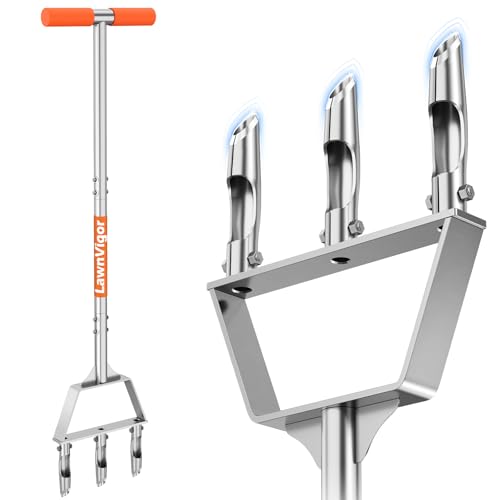
- Core aerator: Relieves compaction before sowing and helps seed reach the soil. View on Amazon
- Soil test kit: A home pH kit gives a quick check before you commit to amendments. View on Amazon
- Mulching or mower with high-wheel adjustment: Lets you hold a three- to four-inch cutting height reliably. View on Amazon
FAQ
Can clover completely replace grass in a lawn?
Yes, many homeowners use nearly pure clover, though a mix with a fine fescue or other grass is common for durability. Pure clover is more prone to uneven color and needs careful mowing.
How long does a clover lawn take to fill in?
Most stands look reasonably full within six to eight weeks of germination, and they usually reach their full density over one to two growing seasons.
Is a clover lawn safe for pets?
Clover is generally considered low risk for pets, but individual animals can react to any plant. Check with your veterinarian if you have concerns, particularly with grazing animals or sensitive pets.
Will clover attract stinging insects?
Clover attracts many pollinators, including honeybees and bumblebees, which are generally not aggressive when foraging. Wasps may visit as well. Mow flowering areas before heavy outdoor use and keep bloom patches away from play areas if stings are a concern. Consult a physician if you have a known severe allergy.
Does clover need fertilizer?
Usually little or none. Its nitrogen fixation supplies most of its needs. Phosphorus and potassium may still be needed if your soil test shows deficiencies.
Can I mix clover into an existing grass lawn?
Yes. Overseeding in early fall into a thinned grass lawn is a common approach. Mow low, rake, sow clover at a reduced rate, and keep the area moist.
When should I stop mowing clover?
You do not need to stop entirely. Mowing at three to four inches once every one to three weeks keeps the lawn tidy while leaving bloom available. Leaving some areas unmowed in midsummer provides extra forage.
What is the best time of year to start a clover lawn?
Late summer to early fall is best across most of the northern half of the country, while early spring or early fall works in warmer southern regions. Confirm the timing for your area with your local extension office.
Conclusion
A clover lawn can deliver a green, low-input yard that supports pollinators from spring through fall. Success comes from matching the right species to your site, preparing the soil carefully, sowing at the right time and mowing high. Give the stand a season or two to fill in, and it will reward you with less work and more life in the yard.