As an Amazon Associate I earn from qualifying purchases. This page may contain affiliate links.
A clover killer for lawn use is any product or method that removes unwanted clover from turf, and choosing one well depends on whether you want clover gone entirely or simply under control. This guide walks through how to decide if you need to remove clover at all, which tools and selective options work best, and how to time treatments so you protect pollinators, soil life and the rest of your grass. By the end, you will have a clear plan you can carry out in a single weekend.
First, Decide Whether You Really Need to Kill Clover
Clover is not a lawn problem by default. White clover fixes nitrogen in the soil, stays green during dry spells and gives bees a steady source of nectar. Many homeowners who want a bee-friendly yard decide to keep it. If you are removing clover, make sure your reason is one of these: the patches are so dense they crowd out grass you want, the clover is a different variety you did not intend to plant, or you simply prefer a uniform grass color. For a broader view of the plant’s role, see Clover Lawns Explained and Weed or Wildflower? A Lawn Gardener’s Guide.
If you do decide to remove it, the goal should be selective control rather than wiping out everything in sight. Broad-spectrum sprays damage the grass, the soil microbes and any flowers nearby, so a targeted approach almost always gives better results.
Step 1: Identify the Clover Correctly
Not every clover-like plant responds to the same control. White clover (Trifolium repens) has a three-leaflet form with a pale chevron marking on each leaf, creeping stems that root at the nodes and round white or pinkish flower heads. Black medic and yellow woodsorrel look similar at first glance but respond differently to treatments. Confirm your plant before buying anything. Lawn Weed Identification has photos and key features to compare.
Step 2: Choose Your Control Method
There are four realistic options, and most lawns end up using a combination of them.
Mechanical removal
For small patches, pulling by hand works well if you do it after a rain or a deep watering, when the soil is soft and the roots come up intact. Use a stand-up weeder or a hori-hori knife to get under the crown. Pulling is slow, so it suits patches under about a square yard.
Mowing adjustments
Raising your mowing height gives grass a competitive edge over clover, which tends to thrive on short, frequently cut turf. Keeping the blade at the higher end of your grass species’ range can reduce clover spread over a season. The reasoning behind specific heights is covered in What Is the Ideal Mowing Height for a Pollinator-Friendly Lawn?.
Cultural correction
Clover often moves into thin, low-nitrogen, compacted areas. Improving those conditions helps grass outcompete it. Core aeration, a thin top-dressing of compost and correct watering all shift the balance. Lawn Aeration for Better Soil Health and Pollinator Support and Using Compost to Improve Soil for a Bee-Friendly Lawn explain how.
Selective chemical or organic-acid products
If you need a faster result, a selective broadleaf product can knock back clover while leaving most grasses largely unharmed. Many are labeled specifically for clover and other broadleaf weeds in turf. Read the label for the lawn types it is approved for, the maximum number of applications per season and any re-entry or pet waiting period. Some products are also marketed as organic and rely on fatty acids or horticultural vinegar. These usually burn only the foliage they touch, so repeat applications and careful spot treatment are needed. Pick products according to the guidance in Responsible Lawn Product Selection.
Step 3: Time Your Treatment Around Pollinators
Clover flowers are a major bee attraction, so spraying a blooming patch during active foraging hours is the most common mistake people make. Apply in the early morning or late evening when bees are less active, and avoid windy days so the product does not drift onto nearby flowers. Better still, treat clover before it blooms in spring or after the first flush of flowers has finished. Safely Timing Lawn Treatments Around Pollinator Activity offers a seasonal schedule for common regions.
If ground-nesting bees live in your yard, avoid disturbing bare soil during peak nesting months. Protecting Ground-Nesting Bees During Lawn Maintenance explains how to work around them.
Step 4: Apply the Product Correctly
- Mow the area to your normal height and leave the clippings only if the product label allows it.
- Water lightly a day before treating if the soil is very dry, so the plant is actively growing and takes up product better.
- Measure your product carefully. Use a graduated measuring cup for liquids and a calibrated spreader for granules.
- Spot-treat clover patches with a hand-pump sprayer, keeping the nozzle low so you hit leaves without drifting onto grass you want to keep.
- Keep children and pets off the area until it is dry and the label’s waiting period has passed.
- Wait three to four weeks before judging results, then reseed bare spots with a grass blend that matches your lawn.
Step 5: Prevent Clover from Coming Back
Clover returns when the lawn gives it an opening. Overwatering in shallow, frequent doses, bare patches left after treatment and low-nitrogen soil all invite a new flush. Set a deeper, less frequent watering schedule. Setting Up a Watering Timer for a Healthy Lawn can help you keep it consistent. Test your soil so you know what nutrients are missing, using the steps in How to Test Your Lawn’s Soil for a Healthy Pollinator Habitat.
Quick Checklist
- Confirm the plant is clover and decide whether removal is really needed.
- Pick the lightest control method that will work for the size of the patch.
- Check the product label for approved lawn types, application limits and waiting periods.
- Treat early or late in the day, on calm days, and outside peak bloom.
- Reseed bare areas and adjust mowing and watering to favor grass.
Common Mistakes
- Spraying blooms. This is the fastest way to harm bees. Wait until flowers fade or treat earlier.
- Using a product on the wrong grass. Some formulations injure St. Augustine, centipede or bentgrass. Always check the label.
- Stopping after one application. Many clover patches need two or three treatments spaced a few weeks apart.
- Leaving bare soil. Empty patches get recolonized quickly. Overseed right after the clover dies back.
- Mowing too short. Cutting low gives clover the advantage. Raise the deck.
Recommended gear
A stand-up weeder helps you extract clover crowns with less back strain, and it is useful on patches that are too large for a hand tool but too small to justify spraying. View on Amazon
A hand-pump garden sprayer lets you apply a selective product to individual clover patches without spraying the surrounding grass. View on Amazon
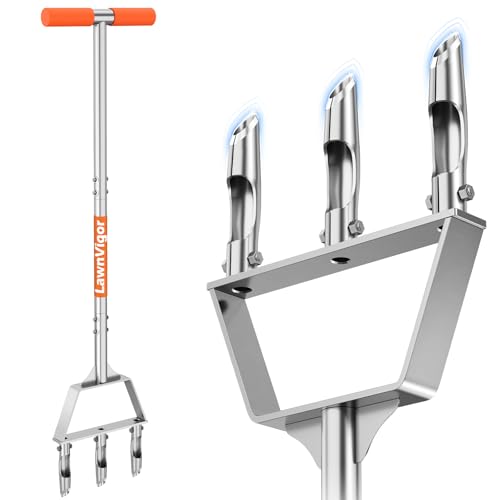
A core aerator reduces compaction, which is one of the conditions that lets clover move in. Owners often find that aerating before reseeding improves the grass’s ability to fill gaps. View on Amazon
A graduated measuring cup prevents over-application, which matters because many selective products are more harmful to grass at higher concentrations. View on Amazon
FAQ
Is clover harmful to a lawn?
Not usually. White clover adds nitrogen to the soil and tolerates drought, so many people consider it a benefit. It becomes a problem mainly when it crowds out the grass you want or when the look of the lawn matters more than the ecological value.
Will a clover killer harm bees?
It can, especially if sprayed on open flowers or drifting onto them. Treat early or late in the day, avoid wind, and prefer spot treatments. Always follow the label’s pollinator precautions.
How long does it take for clover to die after treatment?
Most selective products show visible damage within several days, and full die-back often takes two to four weeks. Plants that look wilted but still green may need a second application.
Can I use vinegar as a clover killer for my lawn?
Household vinegar at typical strengths burns foliage but often fails to kill the roots, and it can also harm grass. Horticultural vinegar at higher concentrations is more effective but more hazardous to handle. Use protective gear and follow label instructions.
Should I kill clover before or after it blooms?
Before blooming is better for bees and for control, since the plant has less energy stored. If you have to treat during bloom, do it in the early morning or evening.
Will clover come back after I remove it?
It often does, because clover seeds persist in the soil. Thick, healthy grass, correct mowing height and balanced fertility make a return much less likely.
Can I apply a clover killer to a new lawn?
Wait until new grass has been mowed several times and is well established. Many products are not labeled for seedlings, so check the label carefully.
When should I talk to a professional?
If clover covers a large share of your lawn, if you are unsure which products are safe for your grass type, or if you have pets, children or allergies to consider, consult a local lawn care professional or your regional extension office.
Conclusion
A clover killer for lawn use works best as one part of a broader plan. Identify the plant, decide whether removal is necessary, and choose the gentlest method that gets results. Time your treatments to protect pollinators, and then strengthen the grass so clover has less room to return.