As an Amazon Associate I earn from qualifying purchases. This page may contain affiliate links.
To get rid of clover on lawn, you need to change the conditions that favor it: low nitrogen, compacted or acidic soil, frequent close mowing, and bare patches where clover can spread. Most homeowners who want less clover combine cultural fixes with hand removal and, if needed, a targeted spot treatment. This guide walks through each step so you can reduce clover while keeping the flowering plants your pollinators depend on.
Before you start, know that clover is not a bad plant in itself. White clover fixes nitrogen, stays green in dry spells, and feeds bees. Your goal is usually not to eliminate it entirely but to bring it into balance with your grass. If you are unsure whether you have clover or something else, check Lawn Weed Identification first.
Step 1: Decide How Much Clover You Want to Remove
Clover that covers a few scattered spots is easy to manage with hand pulling. A lawn that is more than about a third clover usually needs a broader plan that includes soil and mowing changes. Knowing your target keeps you from overcorrecting and losing the benefits clover provides.
If you want a pollinator-friendly lawn, you may decide that some clover is a feature. Clover Lawns Explained covers the tradeoffs in more detail.
Step 2: Test Your Soil First
Clover tends to win where soil is low in nitrogen, slightly acidic, or poorly drained. A basic soil test tells you pH and nutrient levels, which helps you choose the right correction. Most university extension services offer inexpensive testing, and kits are available at garden centers. Target a pH between roughly 6.0 and 7.0 for most turf grasses.
For more on this step, see How to Test Your Lawn’s Soil for a Healthy Pollinator Habitat. If compaction is part of the problem, Lawn Aeration for Better Soil Health and Pollinator Support explains when and how to aerate.
Step 3: Feed the Grass, Not the Clover
Clover fixes its own nitrogen, so it does not compete well when grass gets enough of it. Feeding your turf with a slow-release organic fertilizer gives grass the edge over clover. Apply in early fall and again in late spring, following label rates. Avoid heavy spring doses of quick-release nitrogen, which can cause growth spurts that look good for a week and then leave the lawn thin.
Compost topdressing also helps build a denser turf. Using Compost to Improve Soil for a Bee-Friendly Lawn gives application rates and timing.
Step 4: Adjust Your Mowing Height
Clover thrives when mowed very short, because low mowing stresses grass and opens gaps. Raise your mower deck so grass is kept around 3 to 4 inches tall. Taller grass shades the soil, which discourages clover germination, and it develops deeper roots. Mow when the grass is dry and avoid removing more than one-third of the blade length in a single cut.
If you are also trying to support pollinators, What Is the Ideal Mowing Height for a Pollinator-Friendly Lawn? explains how to find a height that works for both goals. Lawn Mowing and Pollinator Habitat covers timing around flowering.
Step 5: Remove Clover by Hand or Spot Treat
Hand pulling
For small infestations, pull clover after rain or watering, when soil is soft. Grab the plant near the base and pull slowly to get as much root as possible. Clover regrows from fragments, so check the area again in two to three weeks.
Targeted spot treatment
If clover covers larger areas, an organic or selective spot treatment may be practical. Read labels carefully, apply only to affected spots, and avoid spraying on windy days or when plants are in bloom. Many products labeled for clover are broadleaf herbicides that can also affect other flowering plants, so spot application is the safer choice. For guidance on choosing responsibly, see Responsible Lawn Product Selection and Safely Timing Lawn Treatments Around Pollinator Activity.
Step 6: Fill Bare Spots and Keep Them Filled
Clover moves into thin areas quickly. Overseed bare or thin patches in early fall, when soil is warm and air temperatures are cooler, which favors grass germination. Keep the seedbed moist until seedlings are established. Choose grass species suited to your region and light conditions.
Timing Guide
| Season | Task | Why It Matters |
|---|---|---|
| Early spring | Test soil; hand-pull small patches | Clover is easiest to pull while small |
| Late spring | Light organic feeding; raise mower height | Gives grass a head start before summer heat |
| Summer | Water deeply, mow high, check for spread | Clover tolerates drought, so grass needs support |
| Early fall | Overseed bare spots; apply fall fertilizer | Best window for grass establishment |
Common Mistakes
- Mowing too short. This is the most common cause of clover spreading. Keep grass taller.
- Overfertilizing with quick-release nitrogen. It can cause uneven growth and gaps that clover fills.
- Treating during bloom. Spraying flowering clover exposes foraging bees. Treat early, before blooms open, or wait until flowers fade.
- Pulling in dry soil. Roots break off, and the plant returns.
- Ignoring compaction. Compacted soil favors clover and weakens turf.
Tips for Long-Term Results
- Water deeply but infrequently to encourage deep grass roots.
- Keep records of what you did and when, so you can see what works in your yard.
- Expect some clover to remain. Accepting a low level keeps your lawn healthy and supports pollinators.
Recommended gear
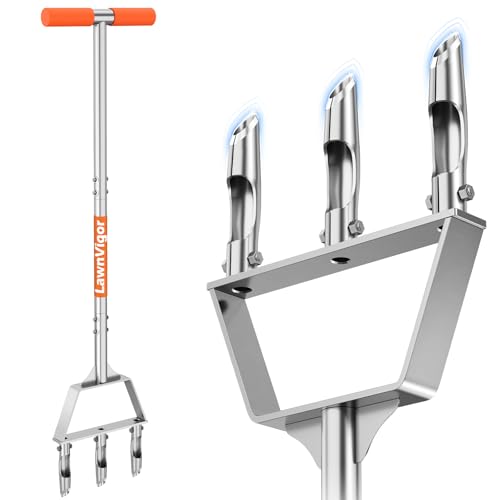
A weed puller with a long handle helps you remove clover roots without bending over repeatedly. Owners often report that tools with a forked tip grab deeper roots more reliably.
A soil test kit lets you check pH before choosing amendments. Look for one that tests pH and basic nutrients.
A spreader for slow-release organic fertilizer ensures even coverage, which avoids the patchy feeding that leaves thin spots for clover. View on Amazon
A rotary mower with adjustable height makes it easy to raise your cutting height in stages. View on Amazon
FAQ
Will clover die on its own if I stop mowing?
Not reliably. Clover can persist through tall grass and may even flower more. Combine less frequent mowing with better fertility to shift the balance.
Is clover harmful to my lawn?
Clover is not toxic to people or most pets in normal amounts, but it can crowd grass if it dominates. Some people accept clover for its color and nitrogen benefits.
How long does it take to get rid of clover on lawn?
Hand pulling small patches can show results in a few weeks. Changing soil fertility and mowing habits usually takes a full growing season or more.
Does clover come back after treatment?
It often does, because seeds remain in the soil. Consistent overseeding and feeding the grass reduce reinfestation.
Can I use vinegar to kill clover?
Household vinegar is non-selective and can injure desirable grass as well as clover. It is best used only on isolated spots, and it does not reach deep roots.
When is the best time to remove clover?
Early spring and early fall are good windows. Avoid treating during peak bloom, when bees are foraging.
Should I be concerned about bees when removing clover?
Yes. Clover is a major bee forage plant. Remove it outside of flowering periods, avoid spraying blooms, and consider leaving some patches if you want pollinator support. For a broader plan, see Protecting Ground-Nesting Bees During Lawn Maintenance.
When should I consult a professional?
If clover covers most of your lawn or you are unsure which products are safe near pets, children, or water sources, consult a local extension office or licensed lawn care professional.
Conclusion
To get rid of clover on lawn, start with soil testing, feed the grass, raise the mower height, and pull or spot treat what remains. Fill bare patches so clover has less room to return. Time your work to protect bees, and accept that a small amount of clover can coexist with a healthy turf.